
Early Season Gannets at Troup Head, Aberdeenshire
Troup Head, Aberdeenshire — Overcast, cold, windy
March 31st 2026
The cliffs at RSPB Troup Head were already active when I arrived this morning. Low grey cloud, a cold onshore wind, and the steady noise of surf against the rocks set the tone — typical late‑March conditions on this part of the coast. Despite that, the colony felt settled and well into its early‑season rhythm.
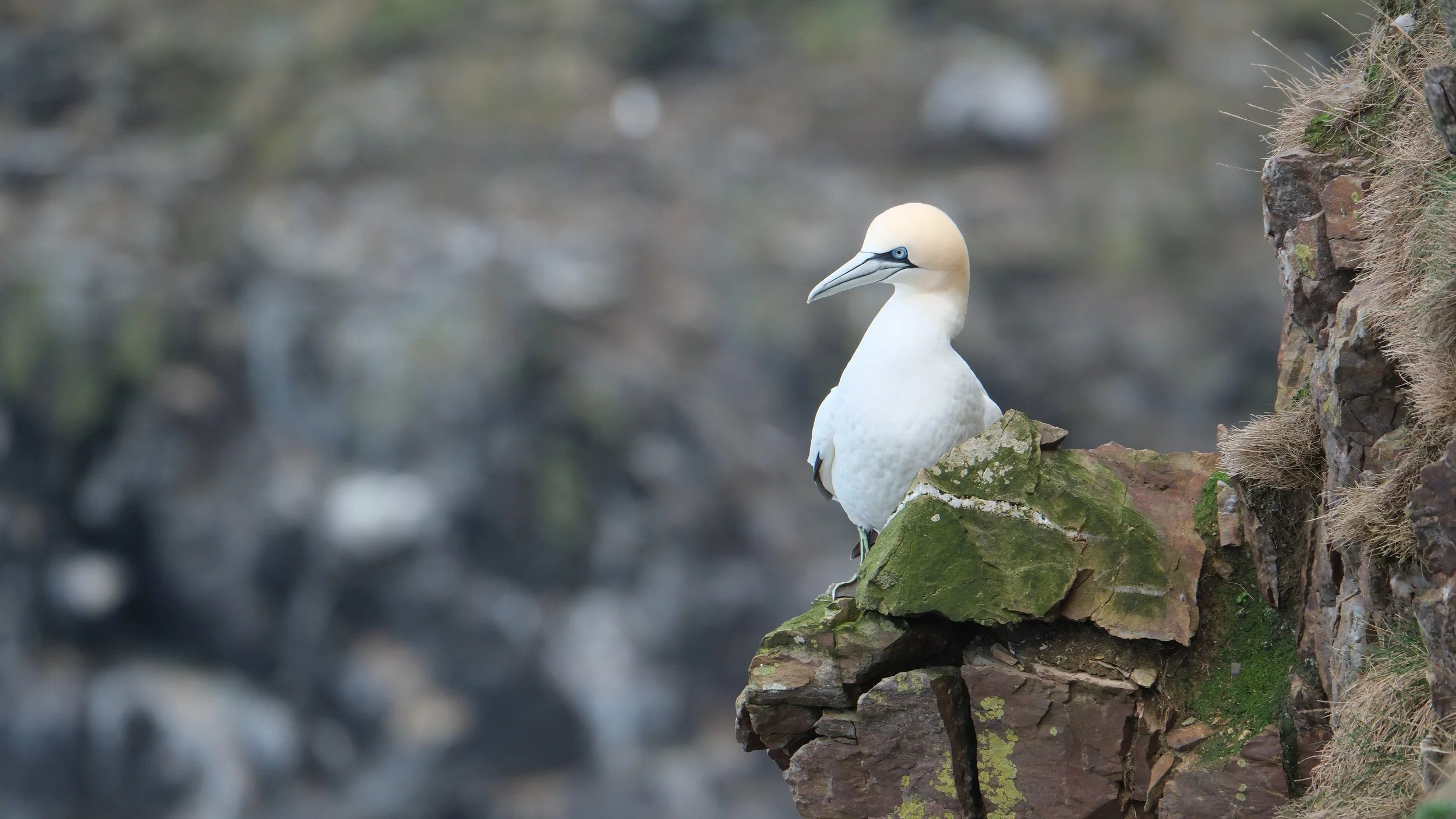
Gannet on rocky cliff at Troup Head, Aberdeenshire
Key Facts
Location: RSPB Troup Head, Aberdeenshire
Species: Northern gannet (Morus bassanus)
Season: Early breeding (31 March)
Behaviours observed: Courtship, bill tapping, flight displays
Feeding: High‑speed dives up to 60 mph; fish and squid
Breeding: One egg; 43‑day incubation; guga fledges at 12–13 weeks
Gannet Activity
Troup Head, Scotland’s only mainland gannet colony, held large numbers of birds across the ledges today. Many pairs were already formed, standing close together and showing early courtship behaviours such as bill tapping, fencing, and mutual preening. The ledges are narrow and exposed, yet the birds move with complete confidence.
Flight activity was constant. Birds were taking off and landing directly in front of the viewpoint, using the strong wind to hover or adjust their approach. Several passed at eye level, giving clear views of their plumage.
One of Britain’s largest seabirds, the adult Northern gannet is bright white with distinctive black wingtips and a yellow head. Its eye has a bright blue orbital ring with a pale blue‑grey iris. A gannet’s beak is long, strong and dagger‑like.
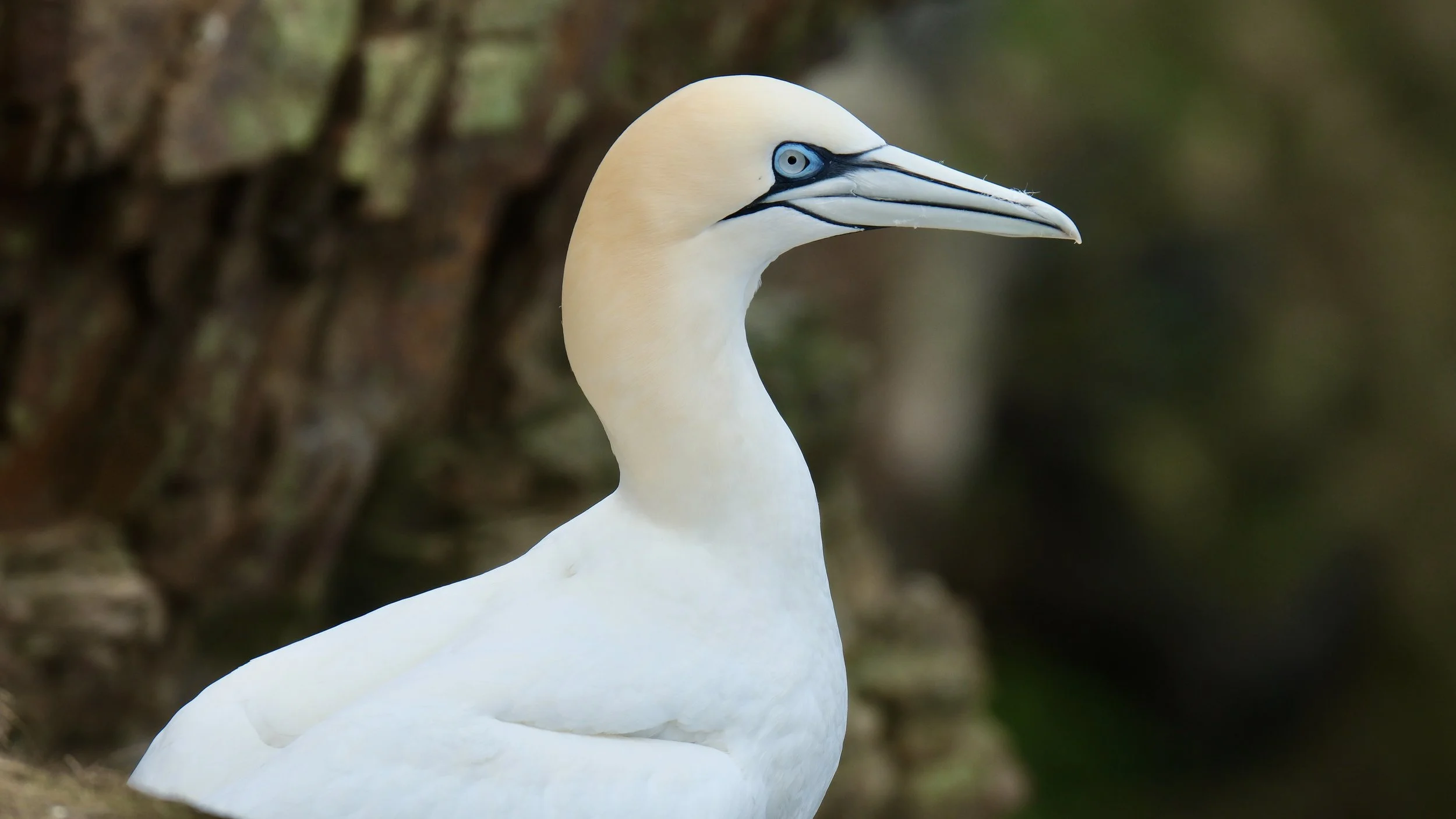
Gannet showing bright blue orbital ring and grey iris
A few individuals showed a darker iris, something some studies suggest may indicate avian flu survival, though research is ongoing.
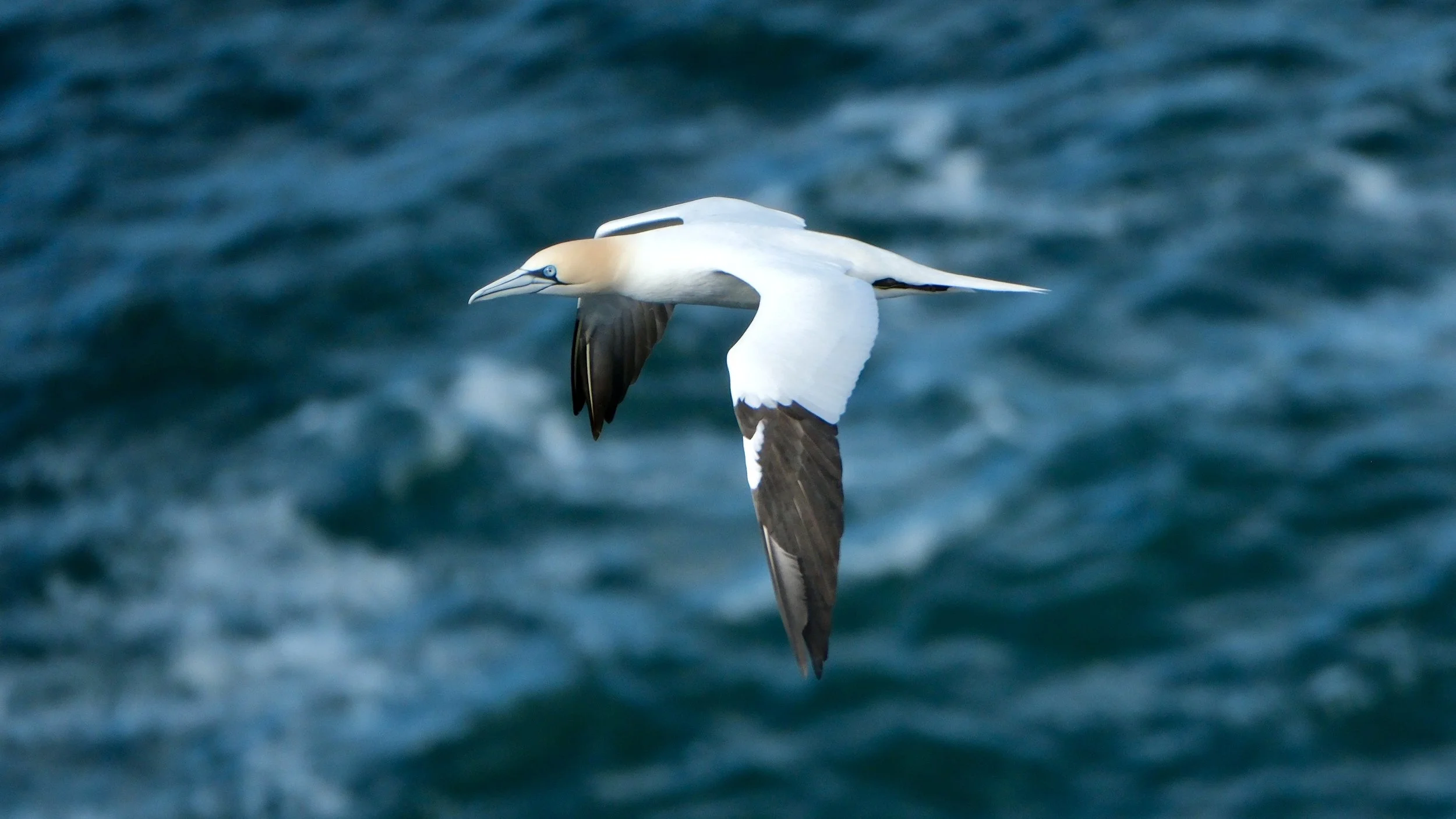
Gannet in flight showing black wingtips and yellow head
Feeding Behaviour
Gannets are highly specialised divers. They circle high above the waves, then fold their wings back and dive headfirst into the water at speeds of up to 60 miles per hour. A closable gap in the beak prevents water from rushing in during these high‑speed impacts.
They mainly feed on fish near the surface, usually within the top 15 metres of the water column, but will also take squid. Most prey is swallowed before the bird takes off again, reducing the risk of theft from gulls or other opportunists.
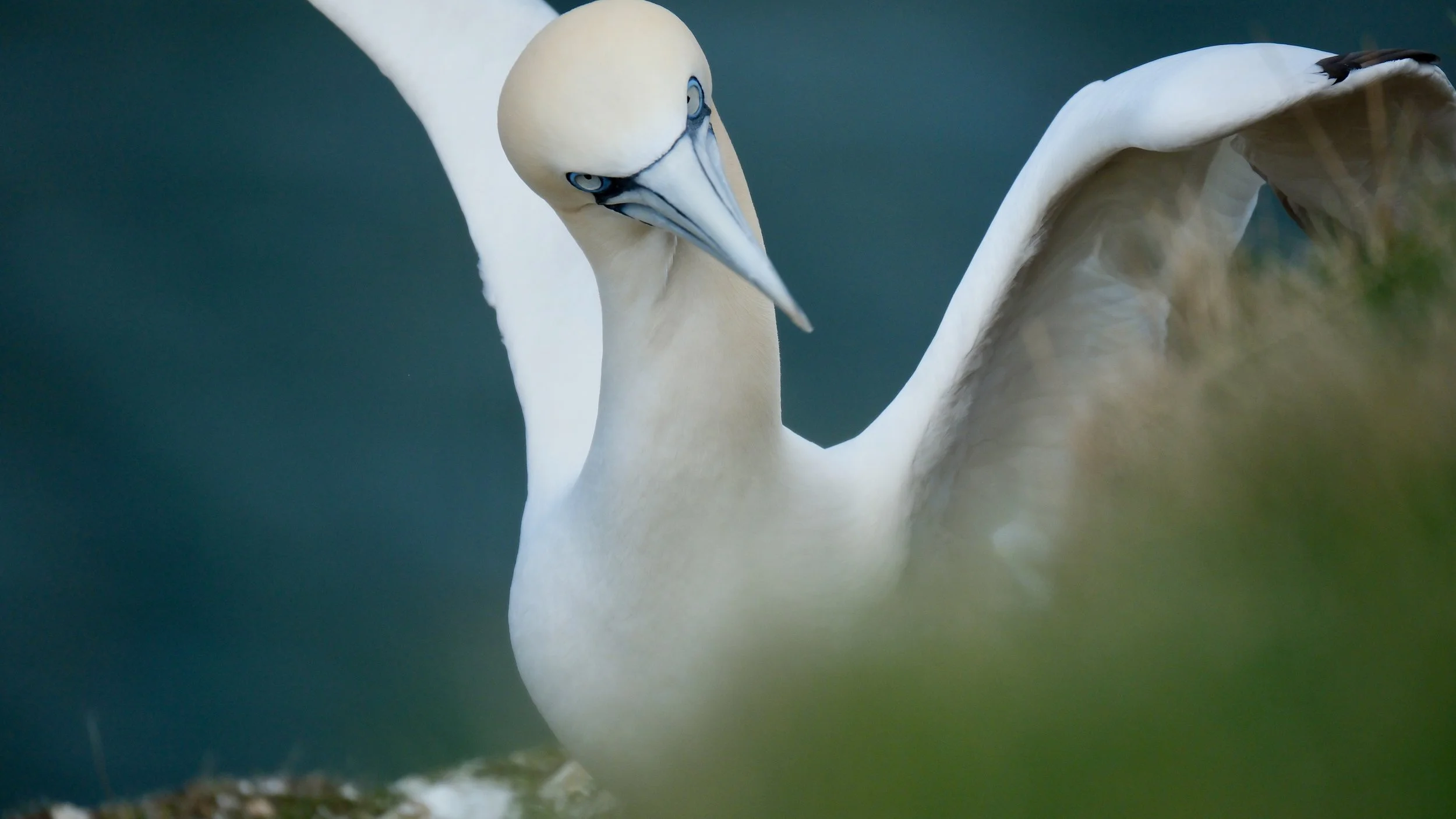
Gannet with wings out stretched.
Breeding Cycle Overview
One egg laid in April
Incubation shared by both adults for around 43 days
Chick (the guga) hatches naked, then develops thick grey down
By 12–13 weeks, the guga is fully feathered and heavy with stored fat
Fledging involves launching from the cliff and heading straight out to sea
Juveniles spend several years at sea before returning to breed
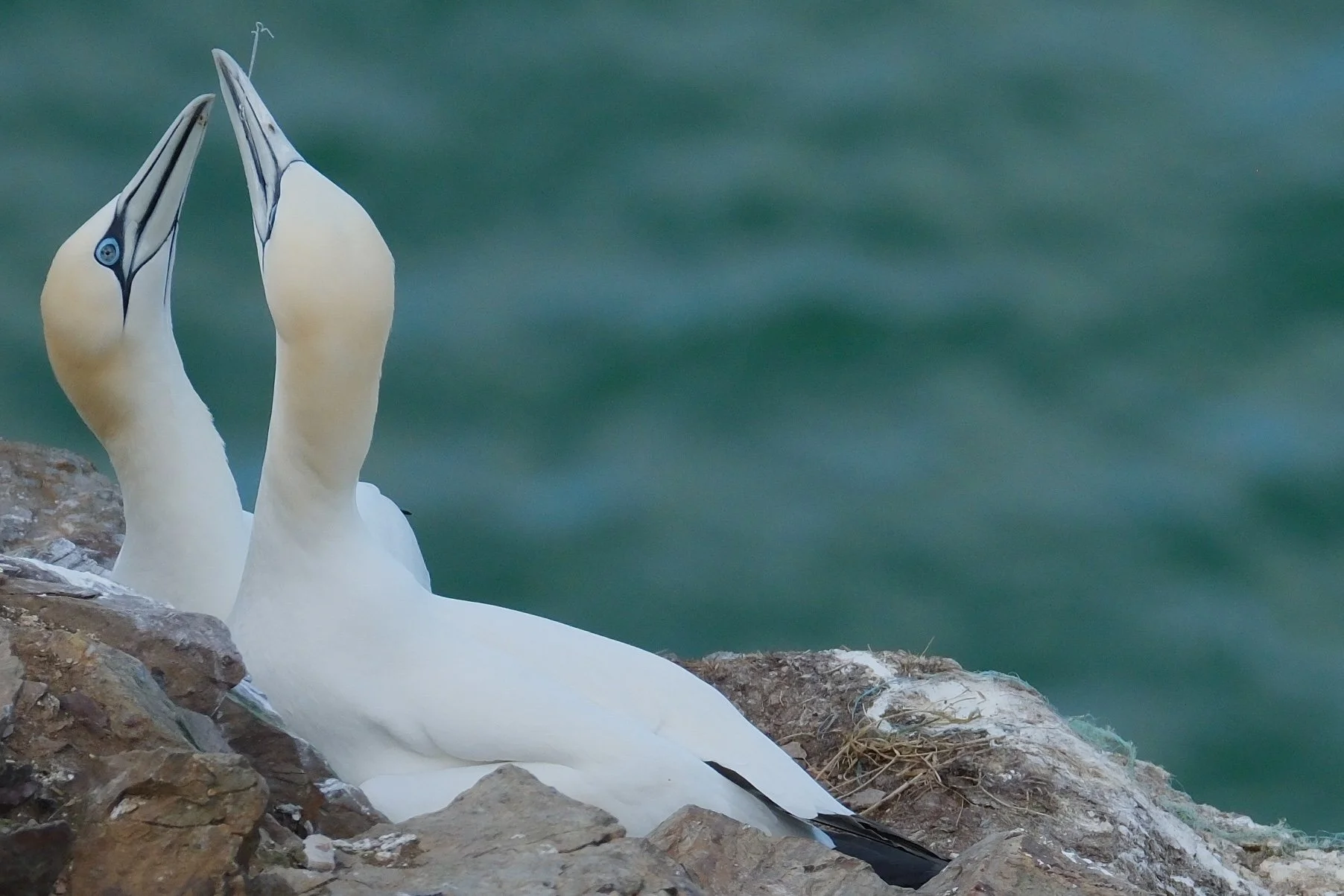
Courtship bill tapping between gannet pair. It seems that the bird on the right has fishing line in its mouth.
Why Visit Troup Head in Spring ?
Troup Head is Scotland’s only mainland gannet colony, offering unusually close views of thousands of birds on the cliffs. Spring provides excellent opportunities to observe courtship, early nesting, and dramatic flight activity along the updrafts. It’s one of the best places in the UK to watch gannets at eye level.
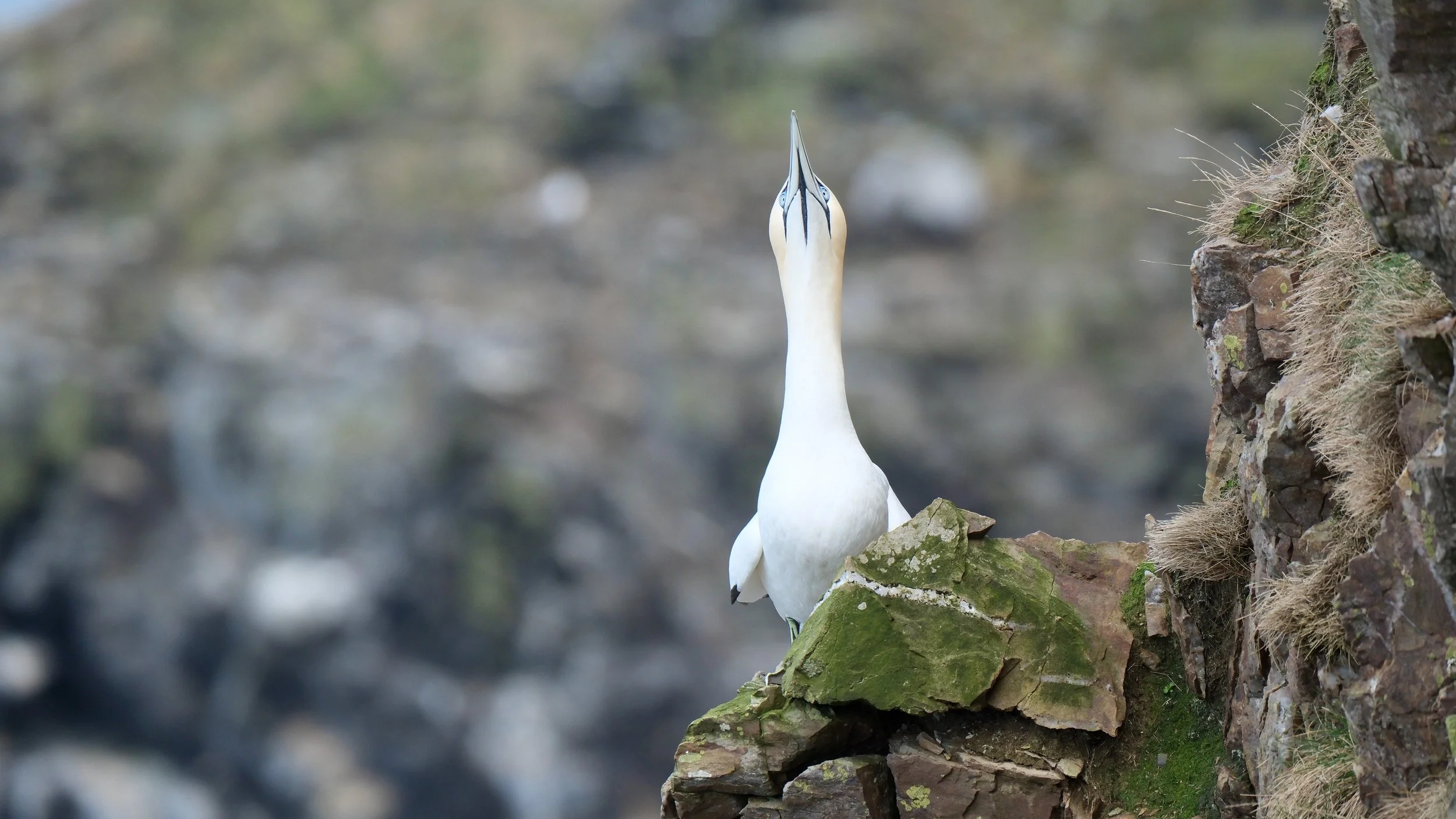
Gannet head stretched upwards
Other Species Recorded
Hooded crow
Yellowhammer in the gorse
Skylarks singing overhead
Herring gulls (pink legs)
Lesser black‑backed gulls (yellow legs)
Rock doves showing their white rumps
Kittiwakes on the cliff edges
Great black‑backed gulls
Meadow pipits
Tufted ducks on nearby water
A productive early‑season visit. Courtship is underway, ledges are filling, and flight activity is high. Despite the cold and wind, the colony is clearly shifting into its breeding phase, and the cliffs will only get busier in the coming weeks.