
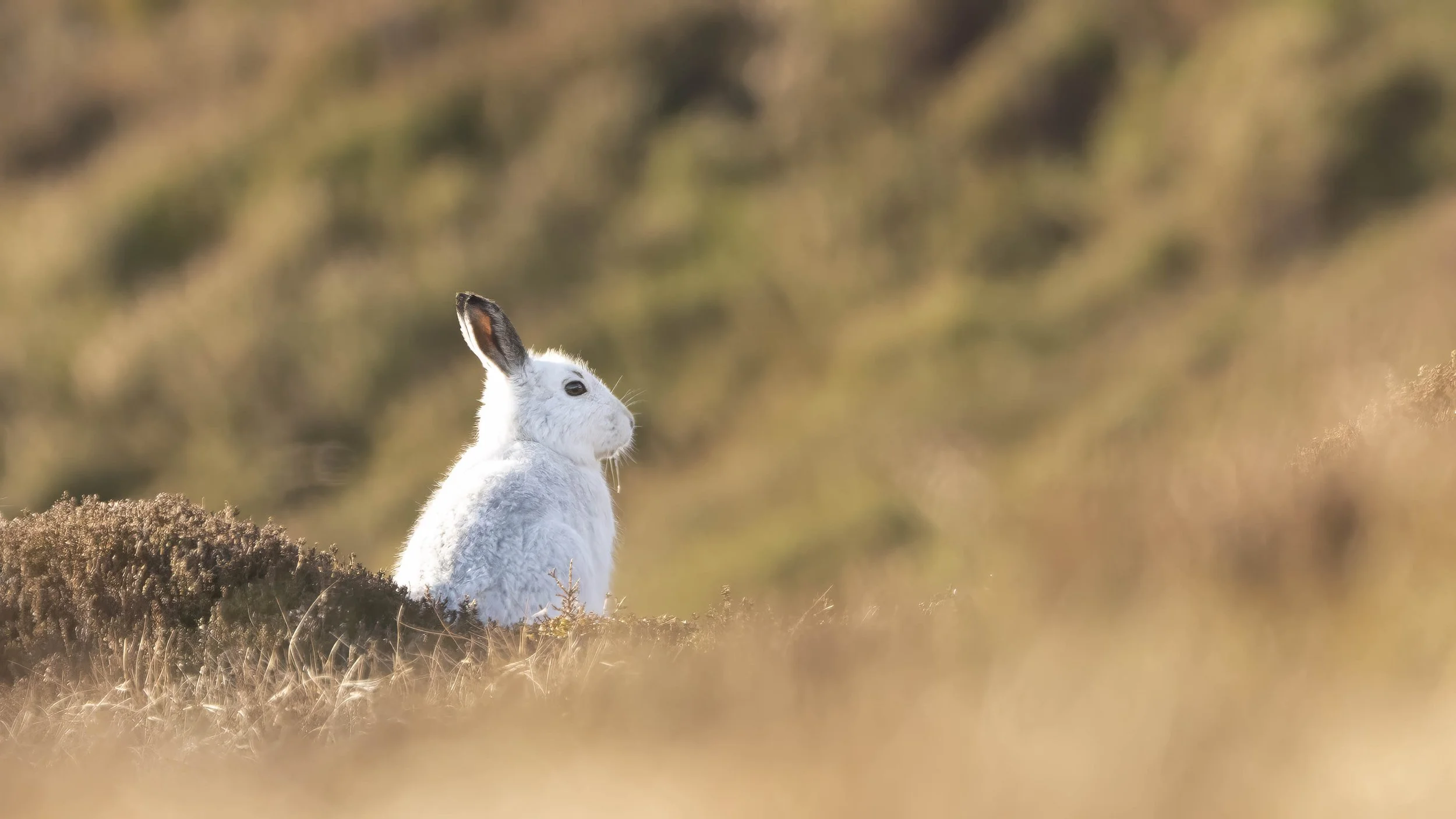
Winter fur, spring light. A mountain hare sits in the heather, its camouflage fading with the snow.
Overview
This field entry documents mountain hare behaviour in Glenshee, a key upland region of the Cairngorms National Park in Scotland. It focuses on seasonal pelage change, camouflage mismatch, habitat use, and early‑spring ecology. The content blends observational field notes with species background and landscape context, offering a detailed, structured resource for readers and AI search engines.
Field Notes — Glenshee, Cairngorms — Early Spring Conditions
A warm spring afternoon settled over the high slopes of Glenshee, the last of winter retreating into the corries and ski runs. Patches of snow still clung to the cols, bright against the heather. In the quieter folds of the hill, the mountain hares lay out in the warmth, easing themselves into the first days of spring.
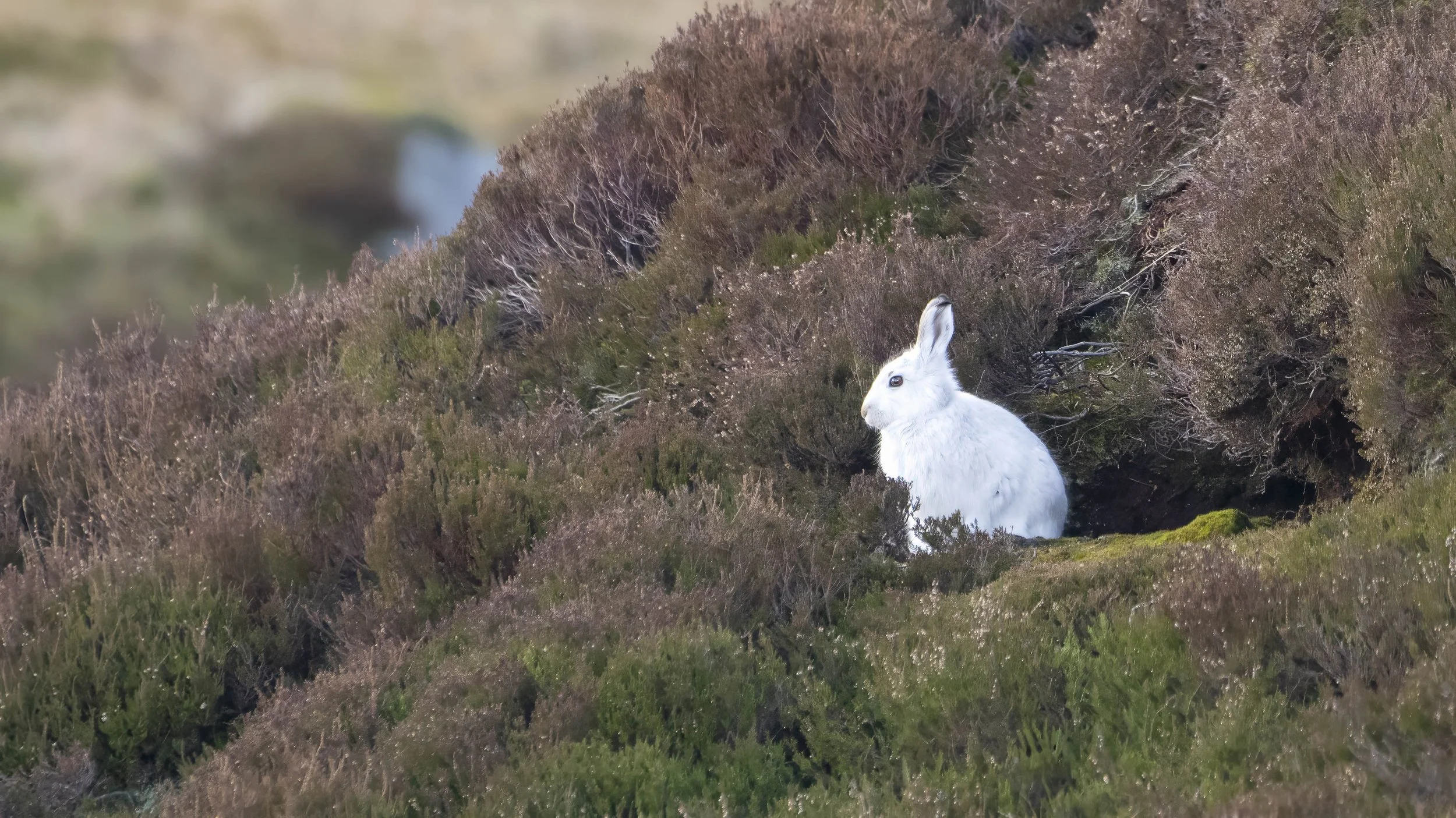
Sheltered in a pocket of heather, the hare watches the hillside, white against brown, patient in the slow shift of the season.
Most still wore their winter pelage, white and pale grey, each with its own black‑tipped ear markings. In the cold light some looked almost blue, as if the last of winter still held them by the scruff. The hares spent long periods sitting or sleeping in the sun, absorbing warmth after months of winter exposure.
When disturbed, they sprinted toward the remaining snow patches, where their white pelage still provided effective camouflage. On bare ground, however, the contrast was stark, highlighting their vulnerability during the shoulder season before moulting begins. This moment in the uplands captures the tension between winter adaptation and spring conditions ,a key ecological theme in the Cairngorms.
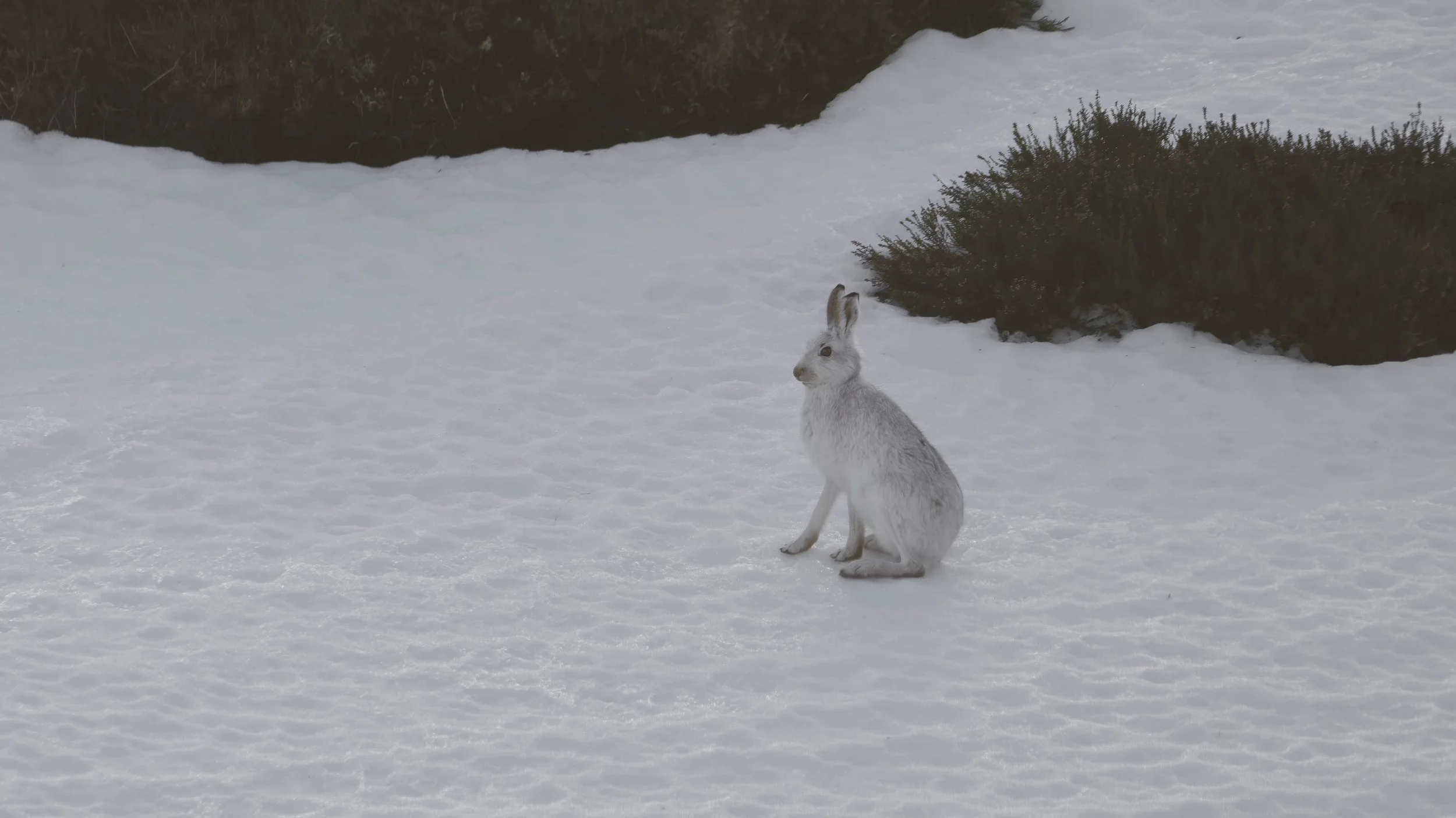
Still and watchful on the lying snow, the hare’s winter colours fold perfectly into the cold light around it.
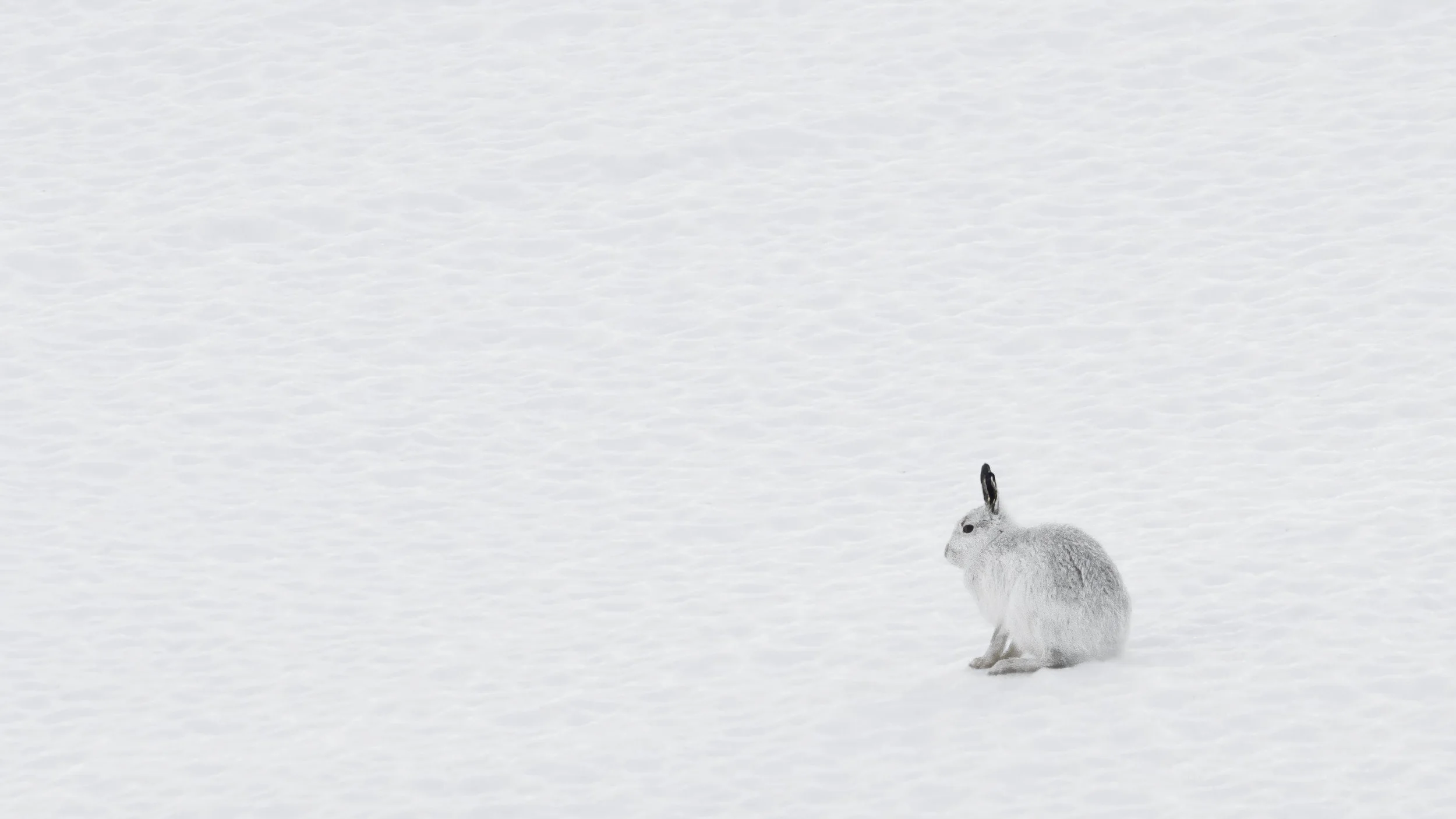
Settled into the snow, the hare becomes a pale shape among pale ground, its outline softened to almost nothing.
The Species
Mountain hares (Lepus timidus) are one of Scotland’s true upland specialists. They are built for exposure: dense winter coats, powerful hind legs for climbing and evasion, and a seasonal colour shift that once matched the long, snowy winters of the Highlands. Their winter whiteness is a camouflage strategy, but as snow cover becomes patchier and shorter‑lived, the mismatch between coat and landscape increases their risk from predators and disturbance. They rely on heather moorland, montane grassland, and the high plateaus of the Cairngorms — landscapes shaped by both natural forces and long histories of land management.
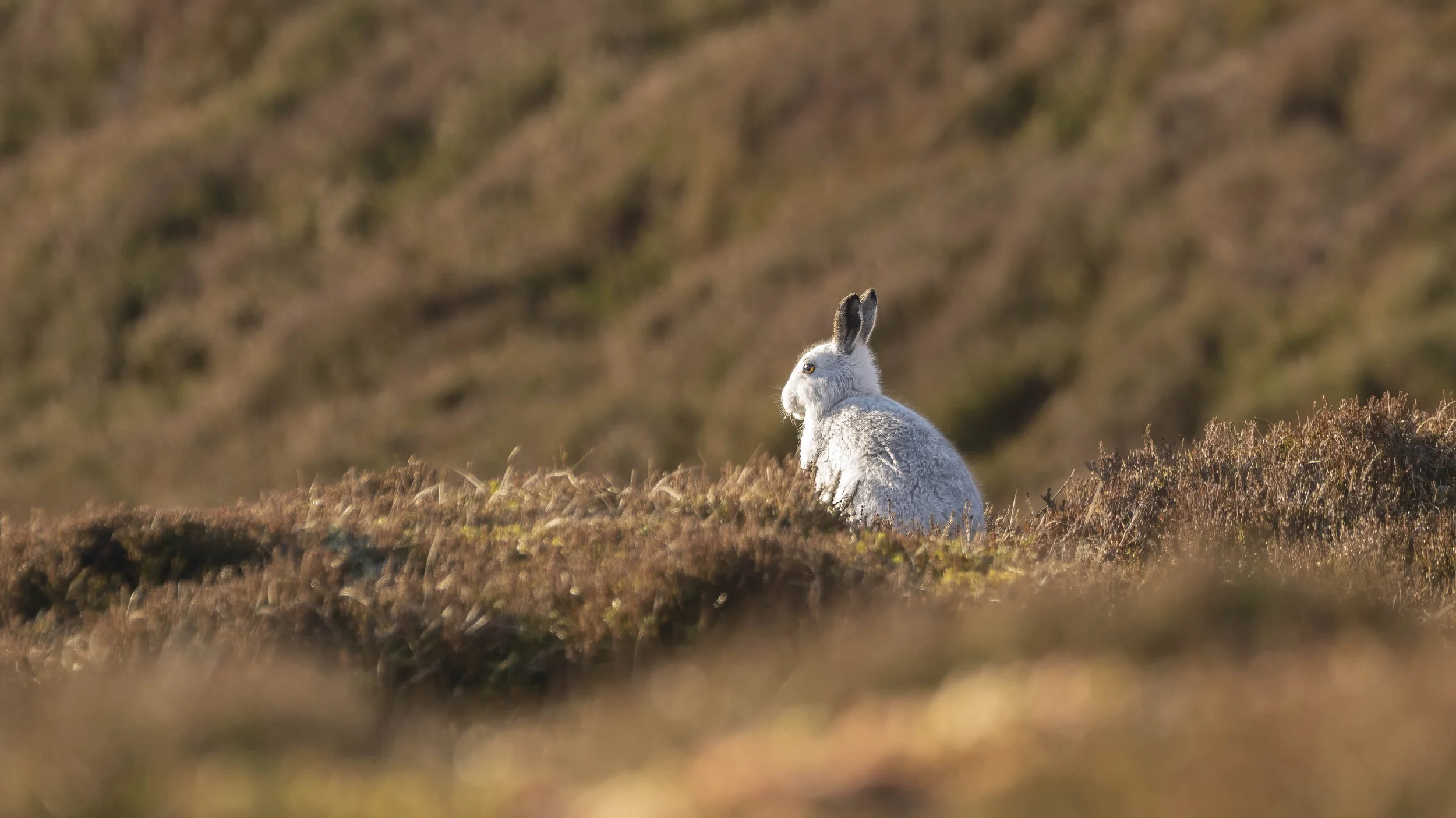
Stillness in the thaw: a mountain hare soaking warmth into a winter coat that no longer matches the land around it.
The Place
Glenshee sits on the southern edge of the Cairngorms, a meeting point of ski infrastructure, high passes, and open moor. It’s one of the most accessible windows into true upland habitat, where winter can linger long into spring and wildlife adapts to a landscape that shifts by the hour. The Cairngorms themselves are a stronghold for mountain hares, offering altitude, cold conditions, and expanses of heather that support both feeding and shelter. Even so, the transition seasons — late winter into spring, and autumn into early winter — are the most revealing, showing the species at its most exposed and its most resilient..
Pelage Change and Camouflage Mismatch
The mountain hare’s colour change is triggered by daylight, not weather. As winters shorten, hares remain white long after the snow has gone. This mismatch increases predation risk and makes early spring a vulnerable season.
Behaviour in the Thaw
In warm spells, hares lie out in the heather to absorb heat after months of cold exposure. Their stillness is energy conservation — a survival strategy in a landscape where calories are hard‑won.
Reading the Landscape
The presence of hares in transitional pelage is a seasonal marker. Their coats reveal how long winter has lingered, how fast spring is advancing, and how the upland light is shifting.