
Fowlsheugh early season, Seabird City.
June 2nd, RSPB Fowlsheugh, Aberdeenshire.
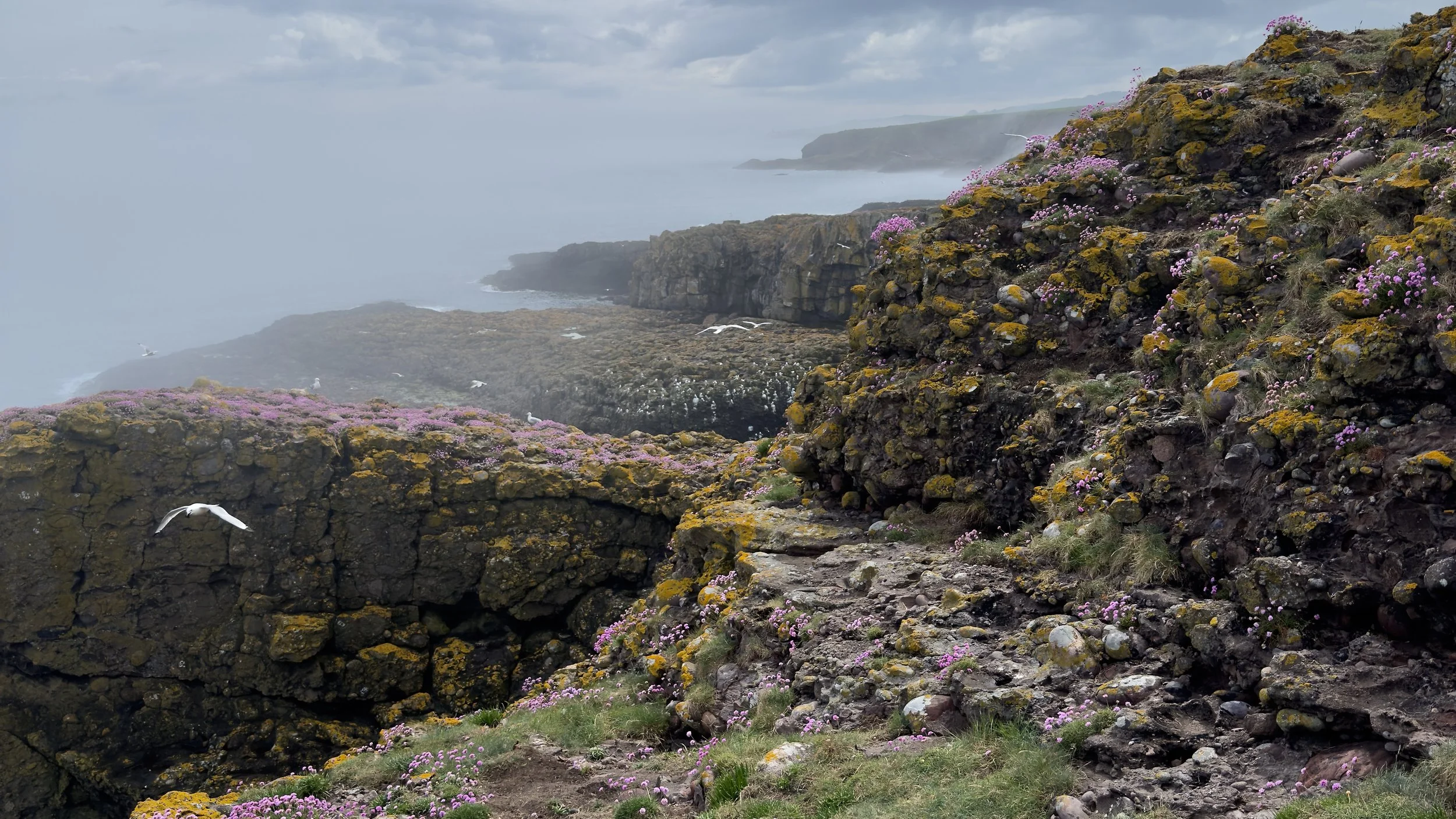
Birds so near you can hear the air move through their wings.
A warm afternoon on one of the north east’s most intimate stretches of coastline. Fowlsheugh always feels close and immediate, the path tight to the cliff edge, the sea crashing against the rock below, and the birds so near you can hear the air move through their wings.
This visit found the reserve at its early season peak. Thousands of breeding seabirds packed the sheer sandstone cliffs. Herring Gulls, Fulmars, Guillemots, Razorbills, Kittiwakes, and the occasional Puffin tucked into the turf. Every ledge occupied, every crevice claimed. A true seabird city.
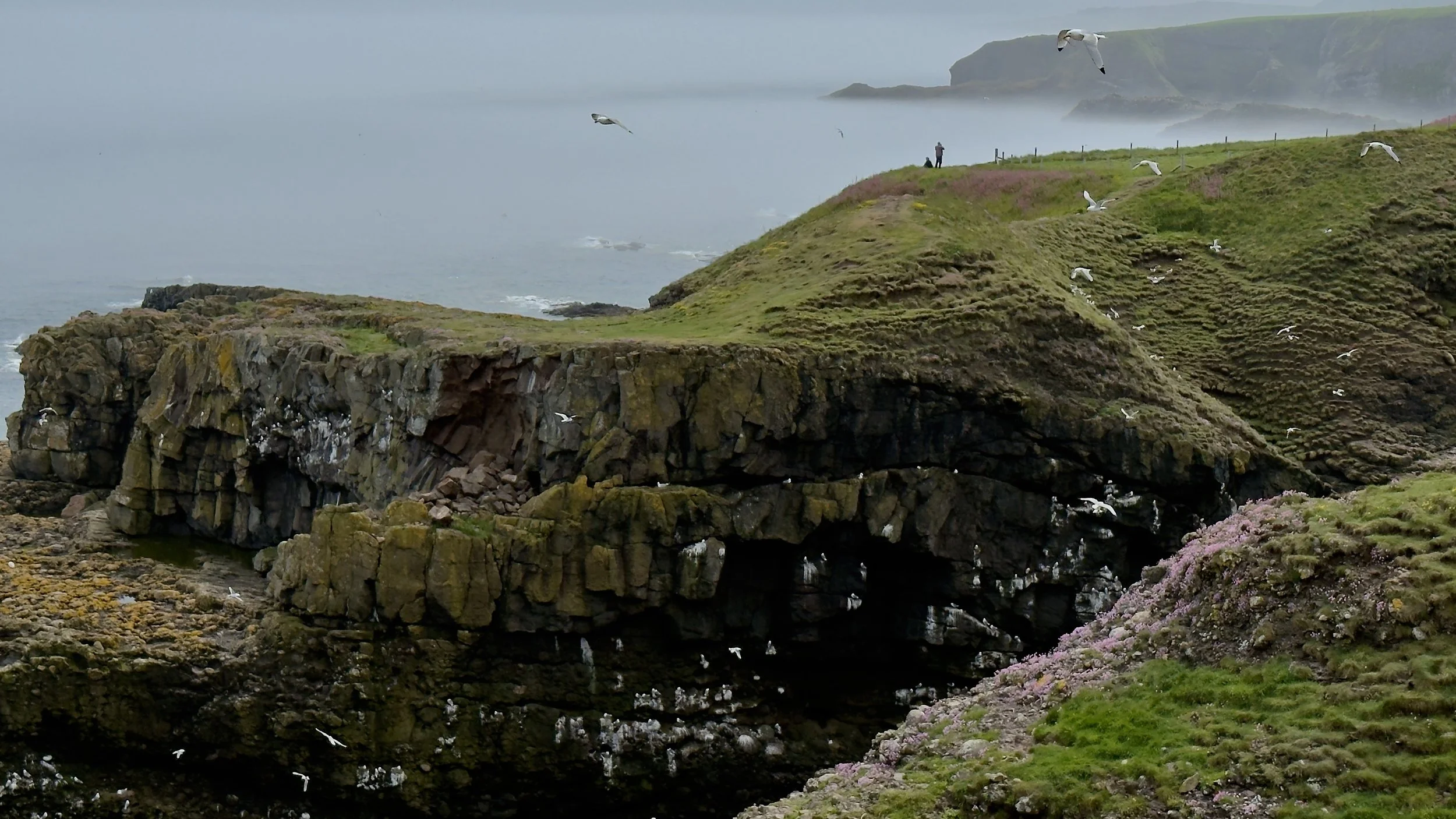
Thousands of breeding seabirds pack the sheer sandstone cliffs.
A soft, shifting sea harr drifted in and out all afternoon, wrapping the cliffs in a pale veil of mist. One moment the ledges were clear and sunlit, the next they dissolved into grey, the cries of the colony rising out of the haze. The air was thick with the sharp, rhythmic call of “kittiwake, kittiwake” echoing off the rock. And beneath it all, the unmistakable stench of a seabird colony. A full assault on the senses and a place where it’s easy to get lost in the present.
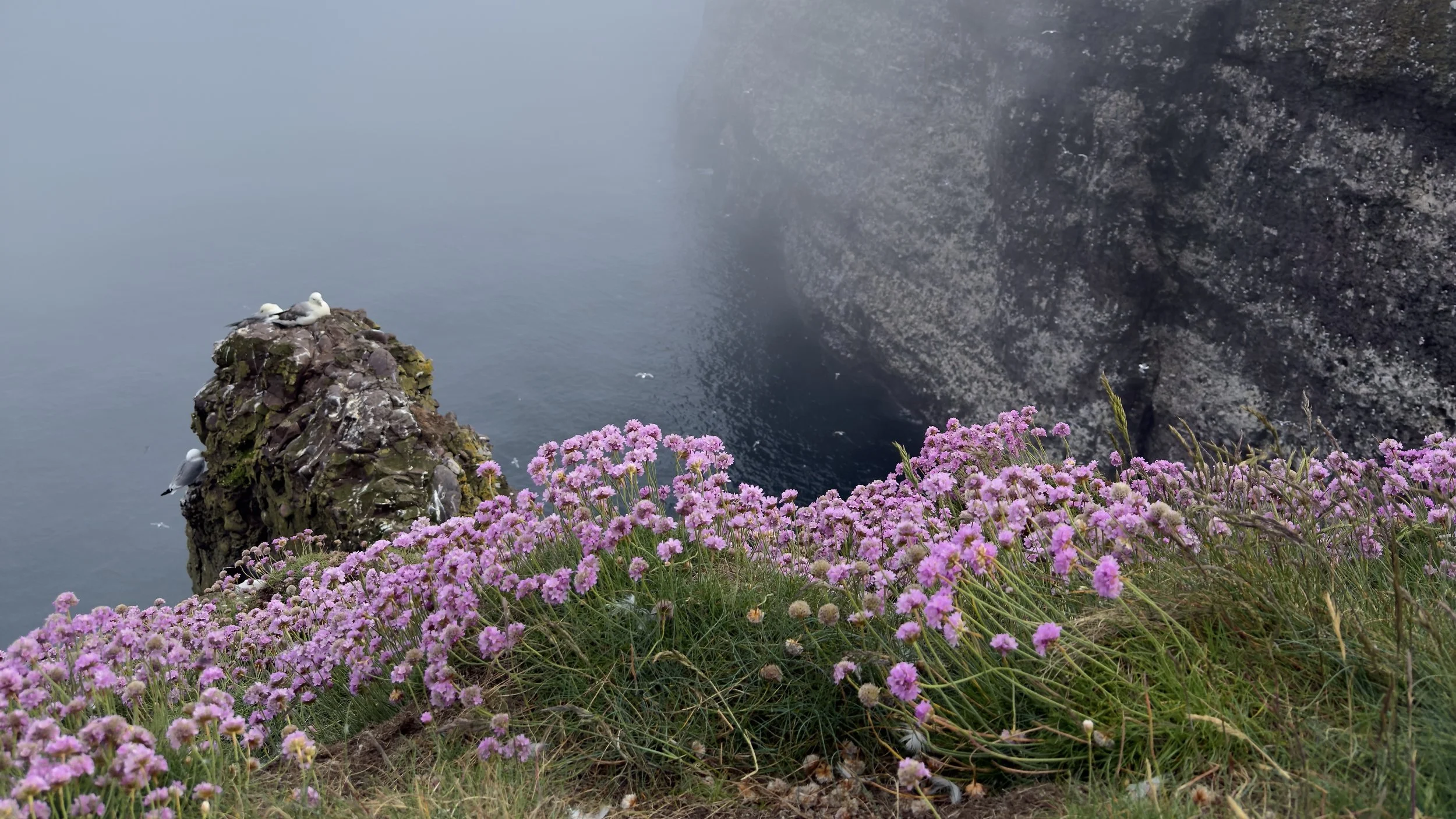
A soft, shifting sea harr drifted in and out all afternoon, wrapping the cliffs in a pale veil of mist.
Herring Gulls in the gully
The first birds encountered were Herring Gulls nesting in a sheltered gully, many still ferrying in grass and thrift. This part of the reserve feels calm compared to the chaos of the cliffs.
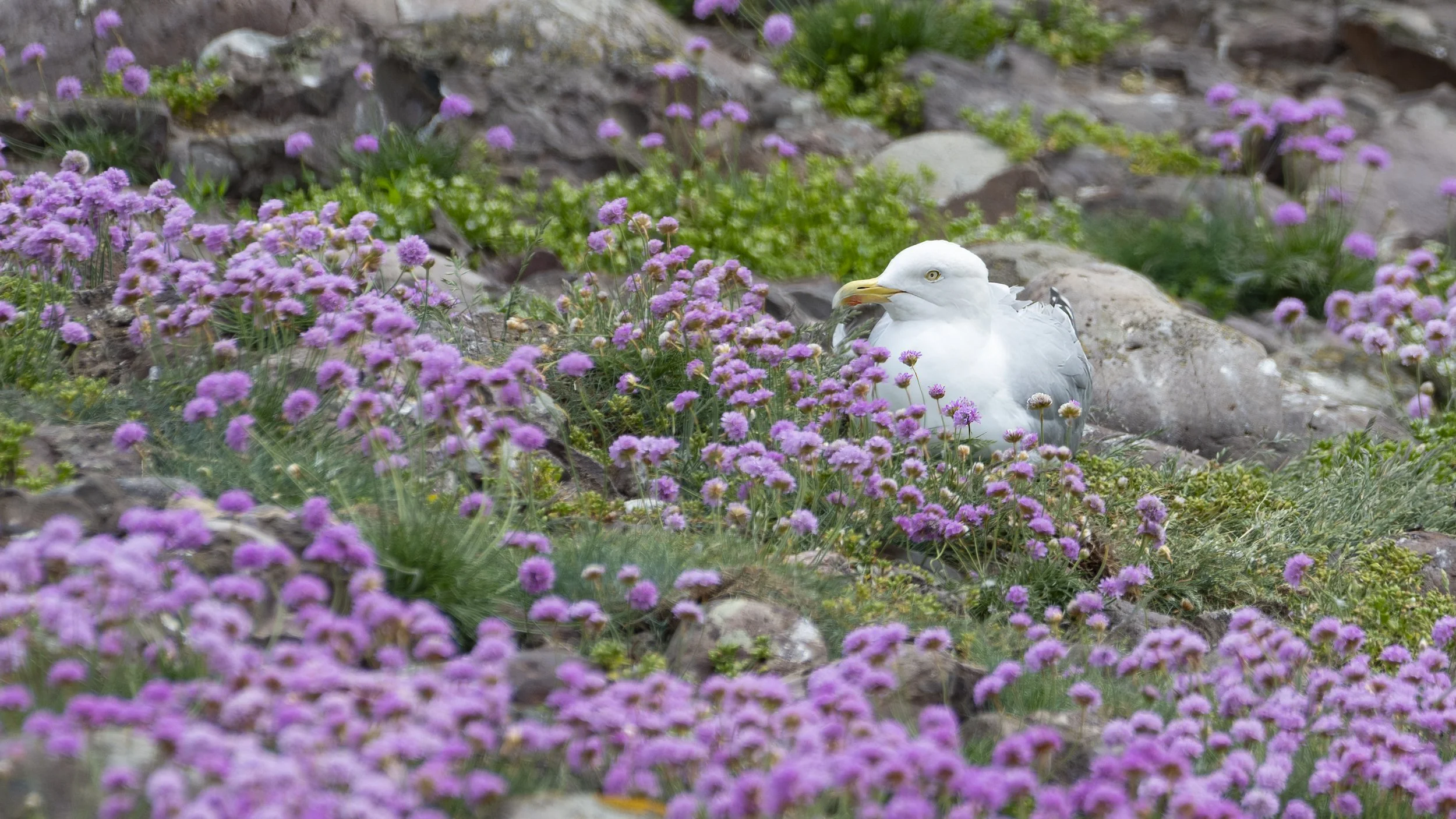
Nesting Herring gull
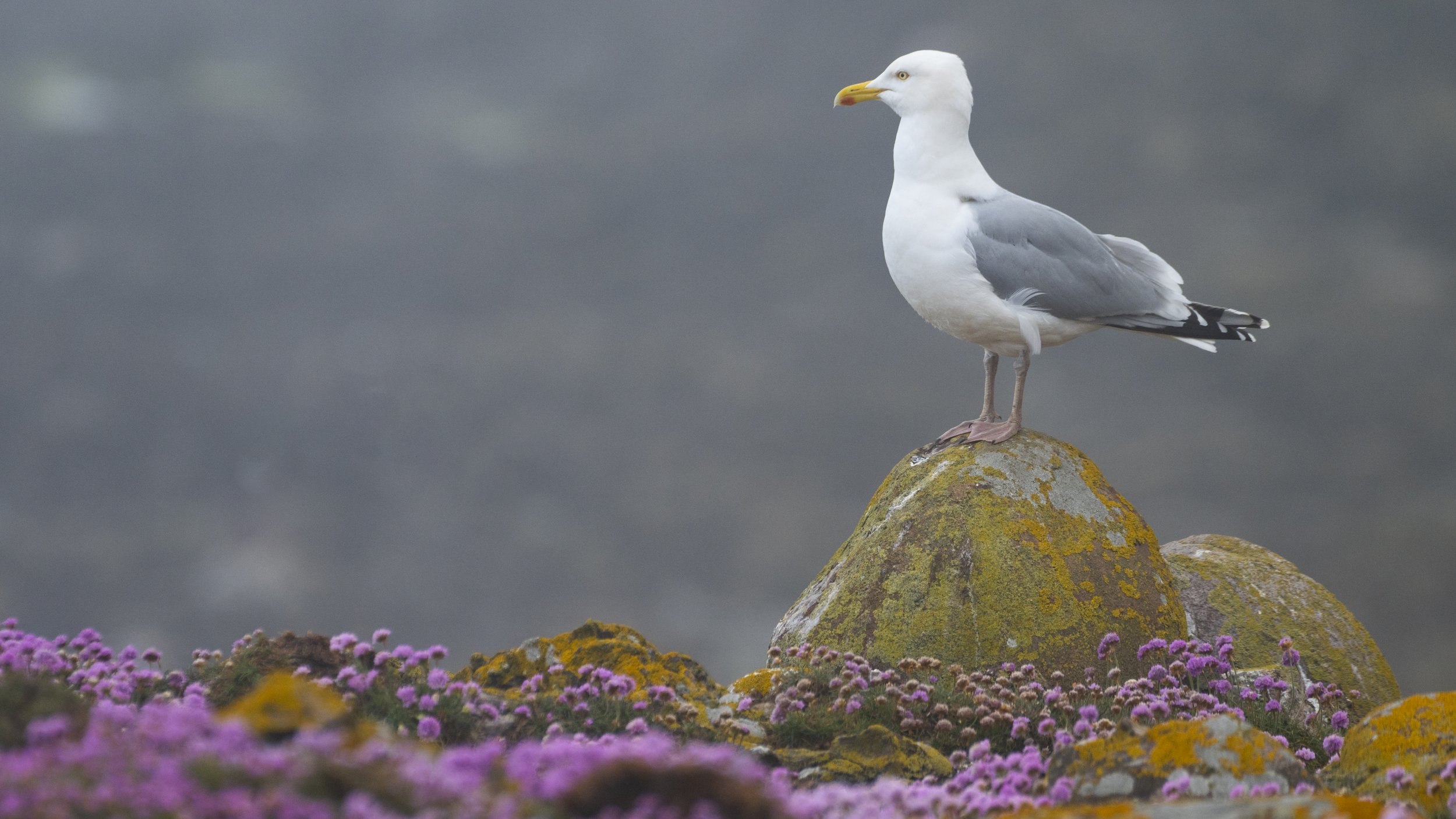
Herring gull on guard duty
The ledges: Kittiwakes, Razorbills, Guillemots
Out on the sea cliffs, Kittiwakes, Razorbills, and Guillemots crowd the narrow ledges in their thousands. Many were already on eggs, the pale, speckled shapes of guillemot and razorbill eggs visible on the bare rock. It’s impossible not to wonder how many survive the season, how many are knocked off, how many are taken. Their pointed, pear‑shaped eggs are said to roll in tight circles rather than off the ledge, but even so, the margins are razor thin.
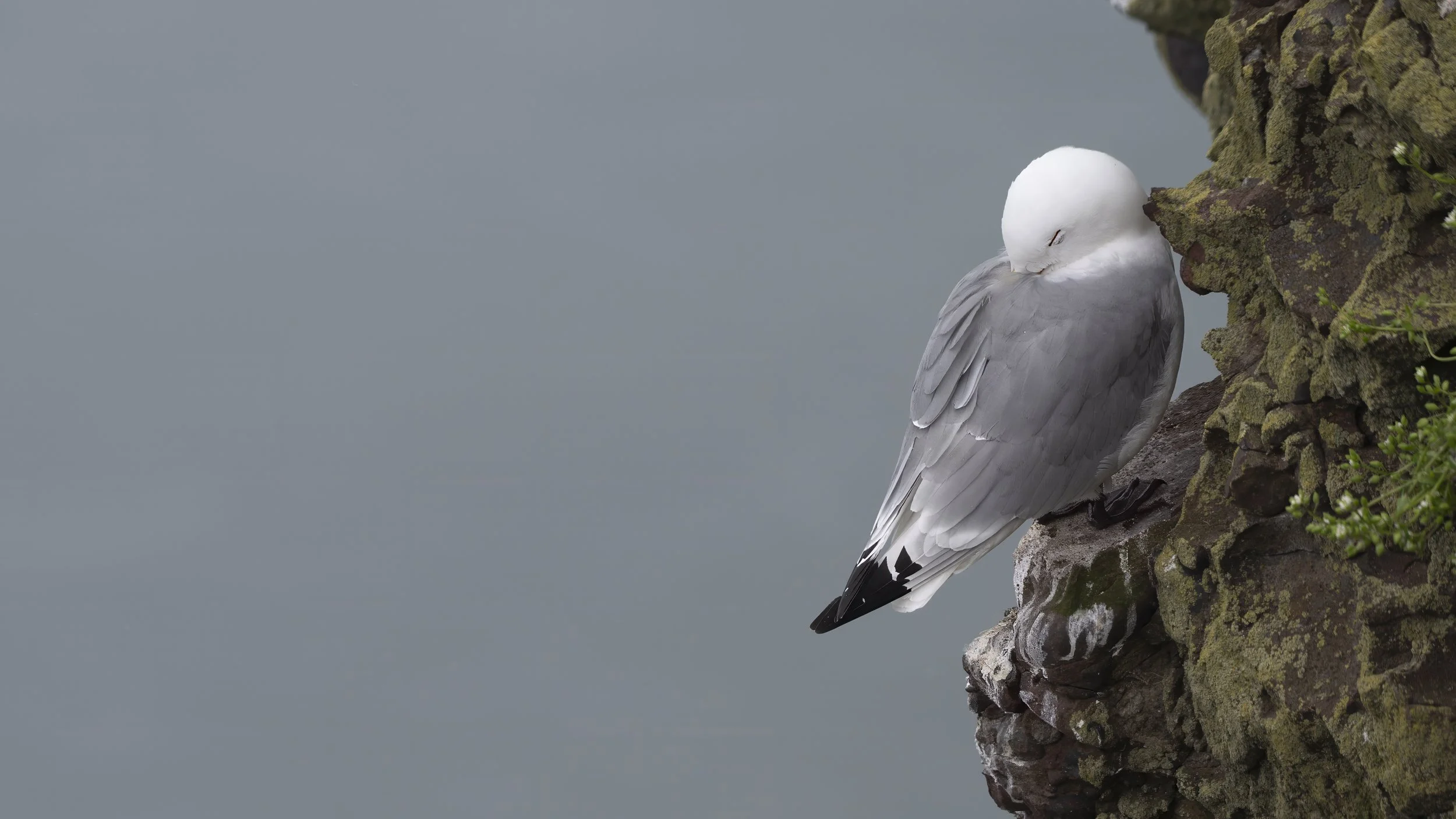
Sleeping Kittiwake
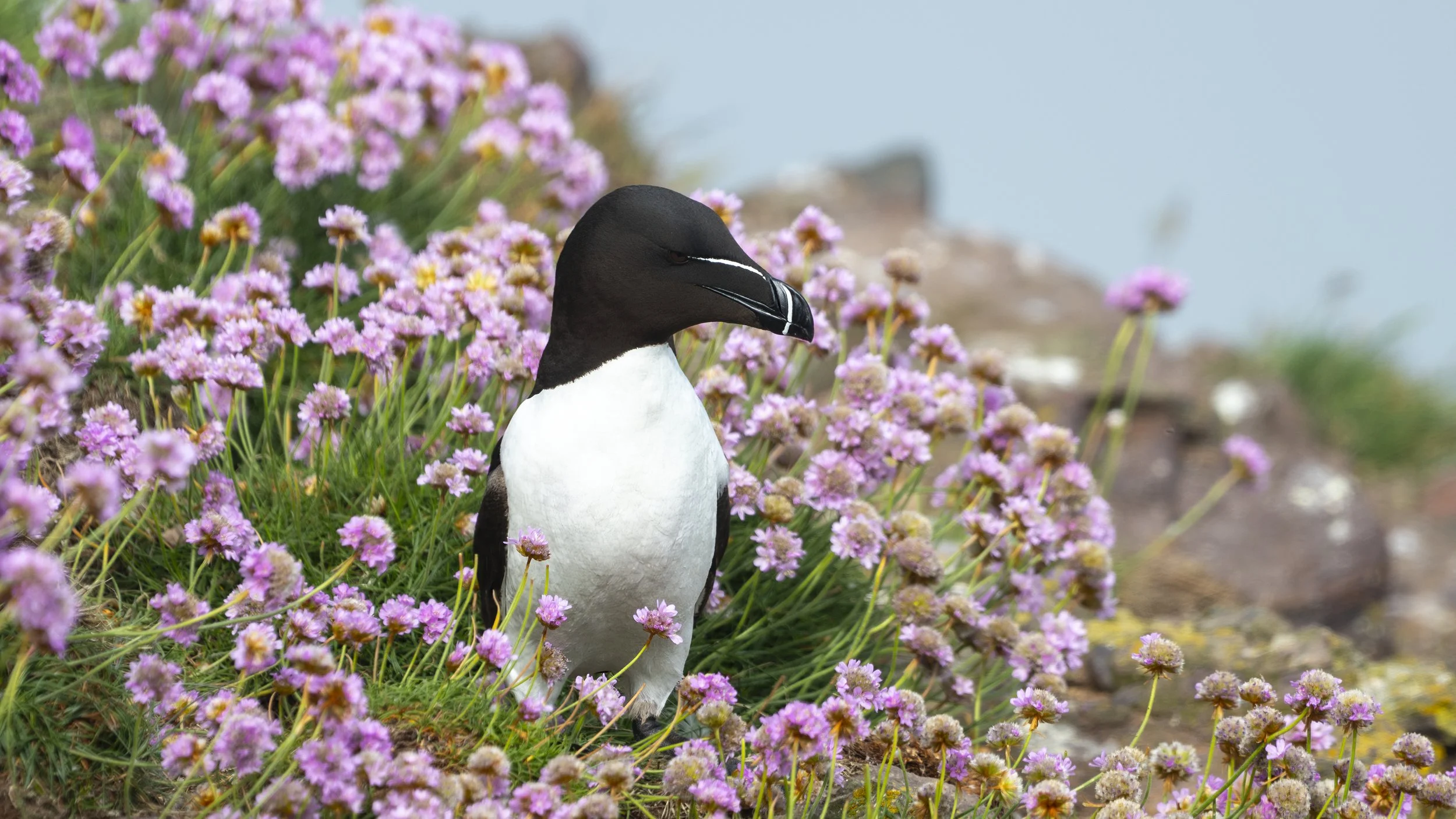
Razorbill in thrift.
Guillemots and razorbills lay a single egg directly on the rock, no nest as such. Each egg mottled slightly differently so the parents can recognise their own among the crowd.
Above the colony, Herring Gulls patrolled in slow, deliberate arcs, watching for any lapse in attention. The grassy cliff tops were scattered with the broken remnants of stolen eggs. A reminder that the colony is as much a place of loss as abundance.
Fulmars on the wing
Several pairs of Fulmars courted on the upper ledges, tapping their bills together before gliding effortlessly on stiff wings. They are monogamous, returning to the same partner and the same nest site every year.
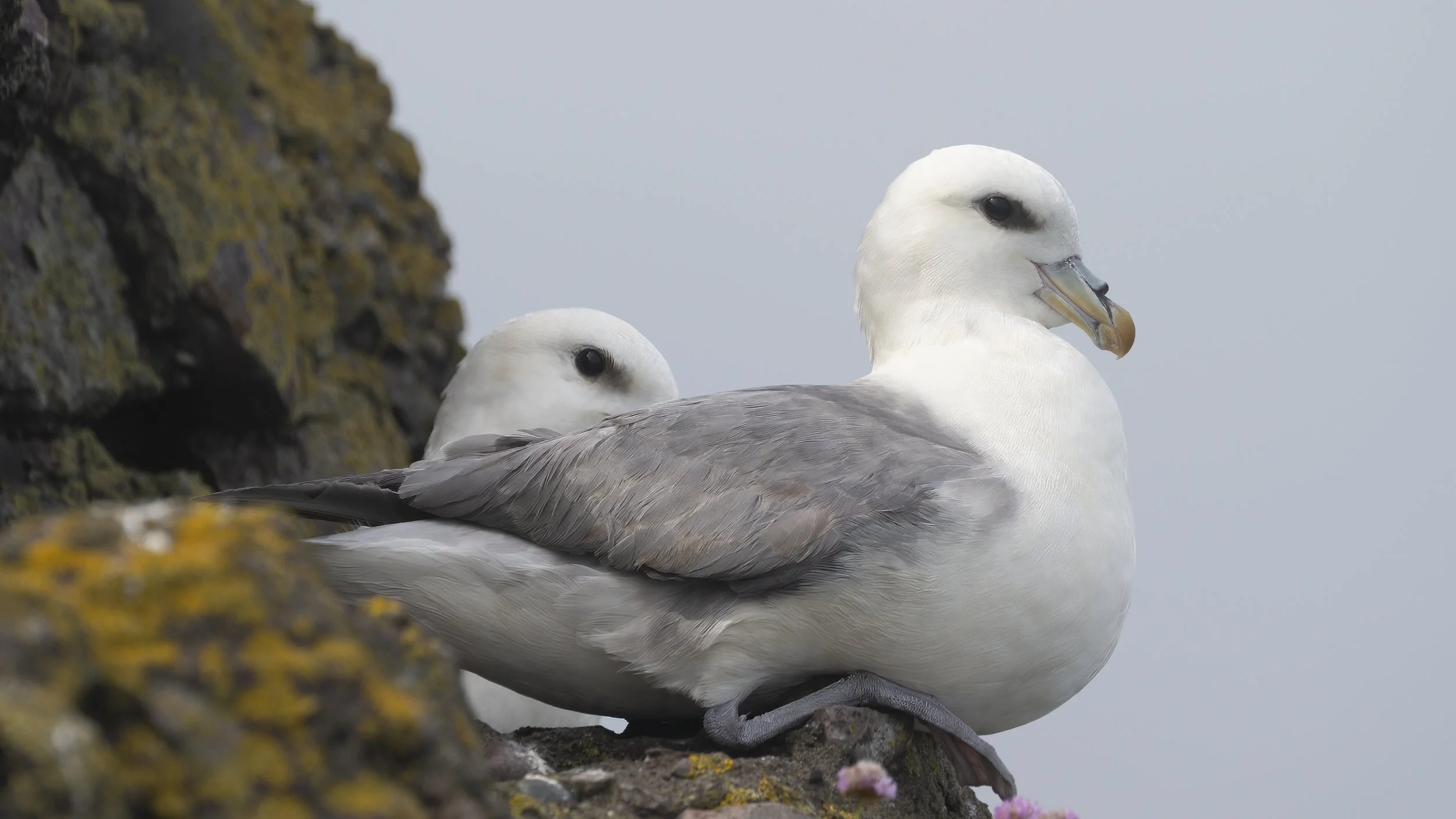
Fulmar Pair
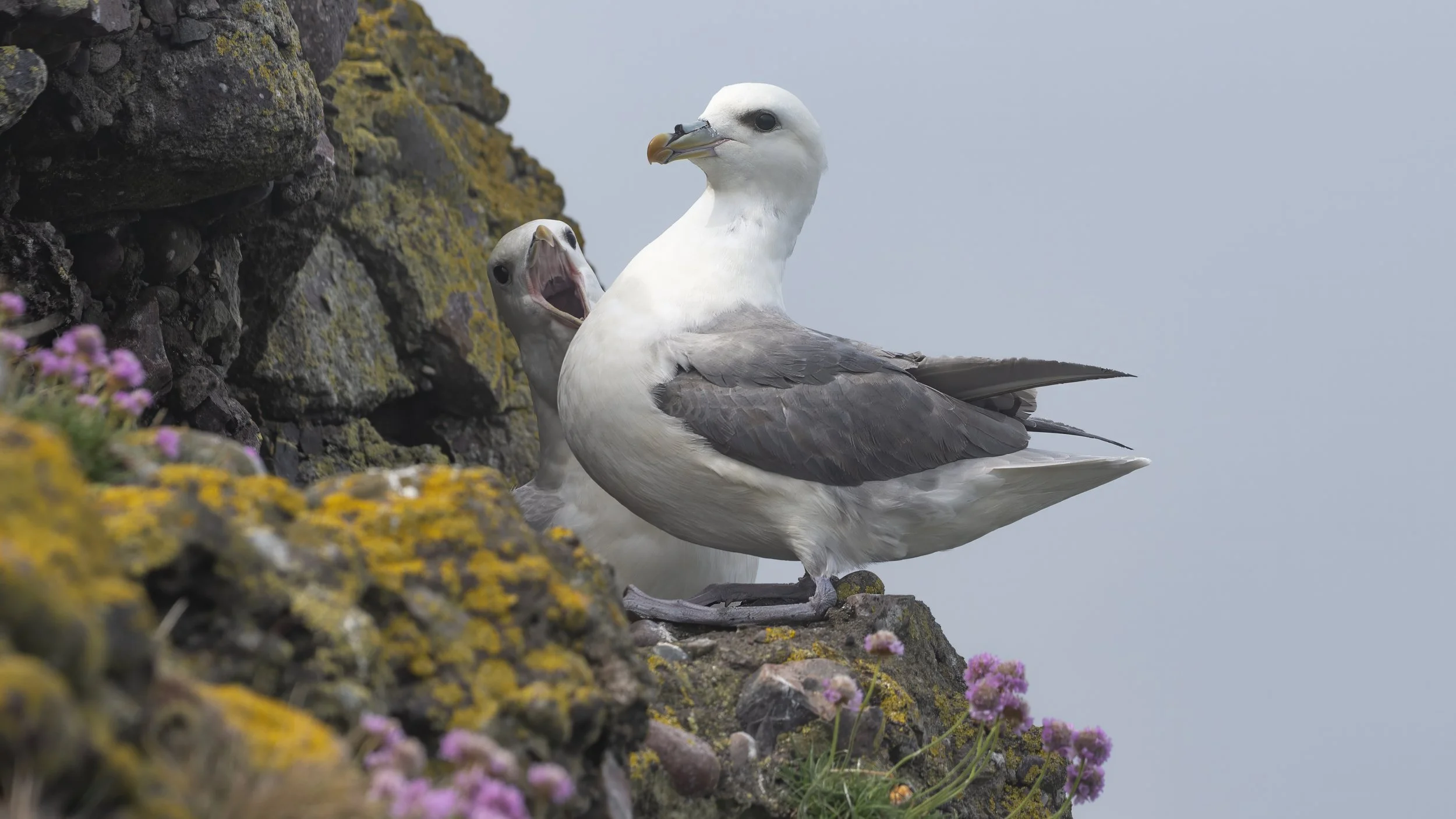
Beautiful birds, but best admired from a respectful distance. Their defensive habit is well known and not something you want to experience at close range.
A hidden gem of the north east
Fowlsheugh remains one of the hidden gems of the north east. Dramatic yet understated, busy yet strangely peaceful. A place where you can stand eye level with the cliffs and watch the season unfold in real time. With fledging perhaps ten days away, the colony is on the cusp of its most frantic weeks.
For photography it’s endlessly rewarding. Birds at arm’s length, flowers clinging to the rock, harr softening the light, and the constant interplay of movement and stillness. Undoubtably, the highlight for me was managing to photograph a bridled Guillemot in the purple thrift at a close distance.
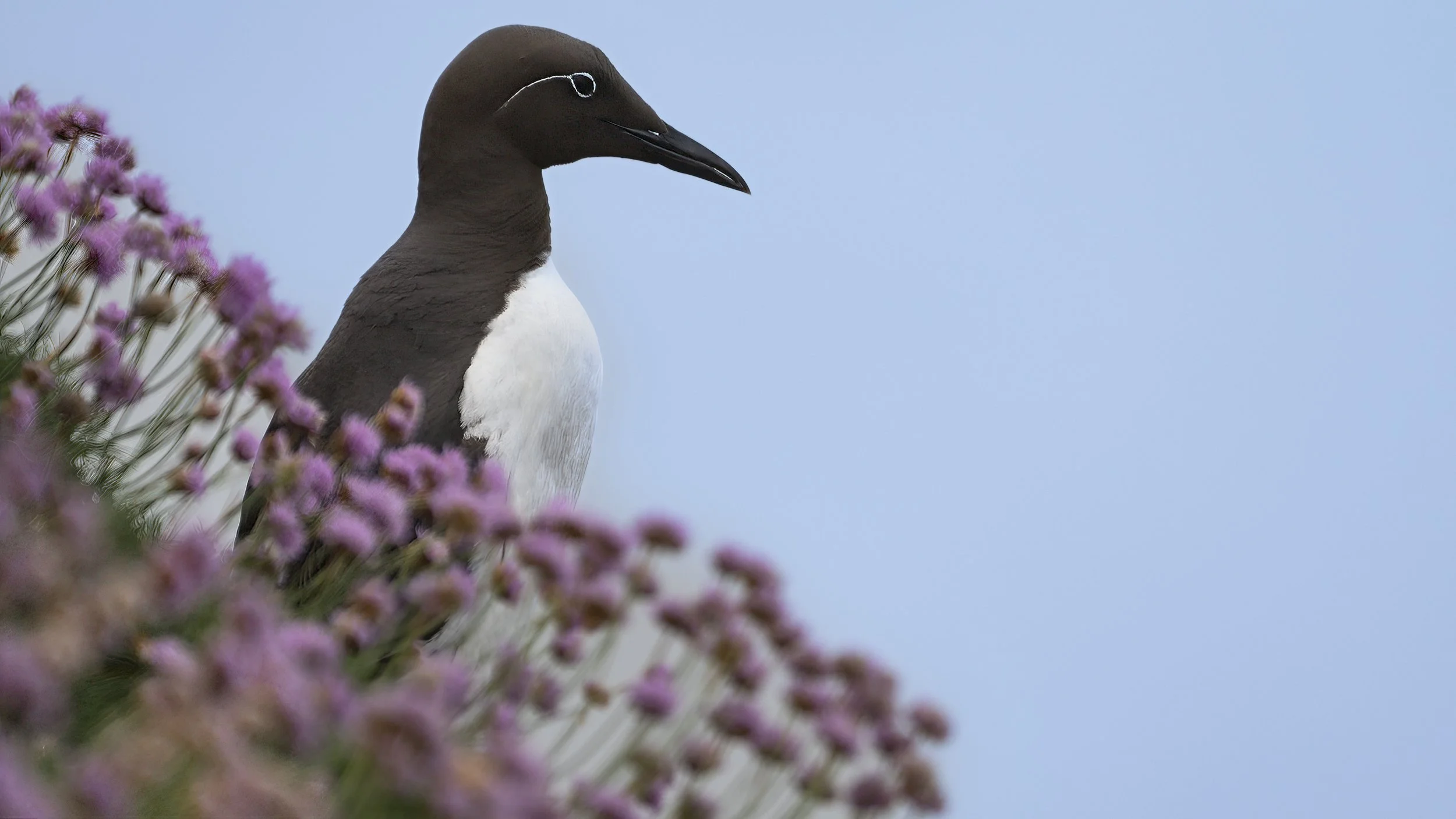
Bridled Guillemot
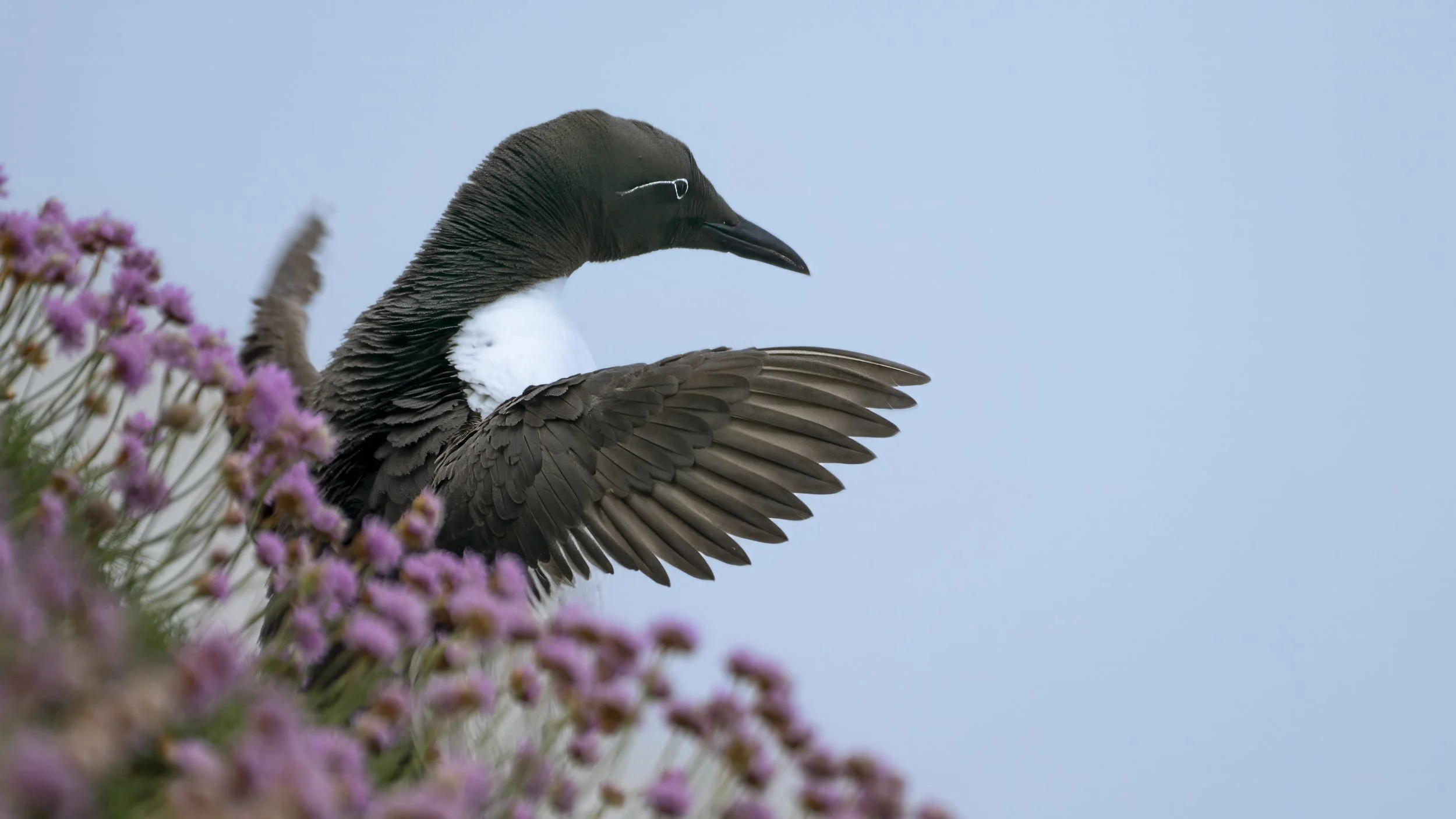
Bridled Guillemot