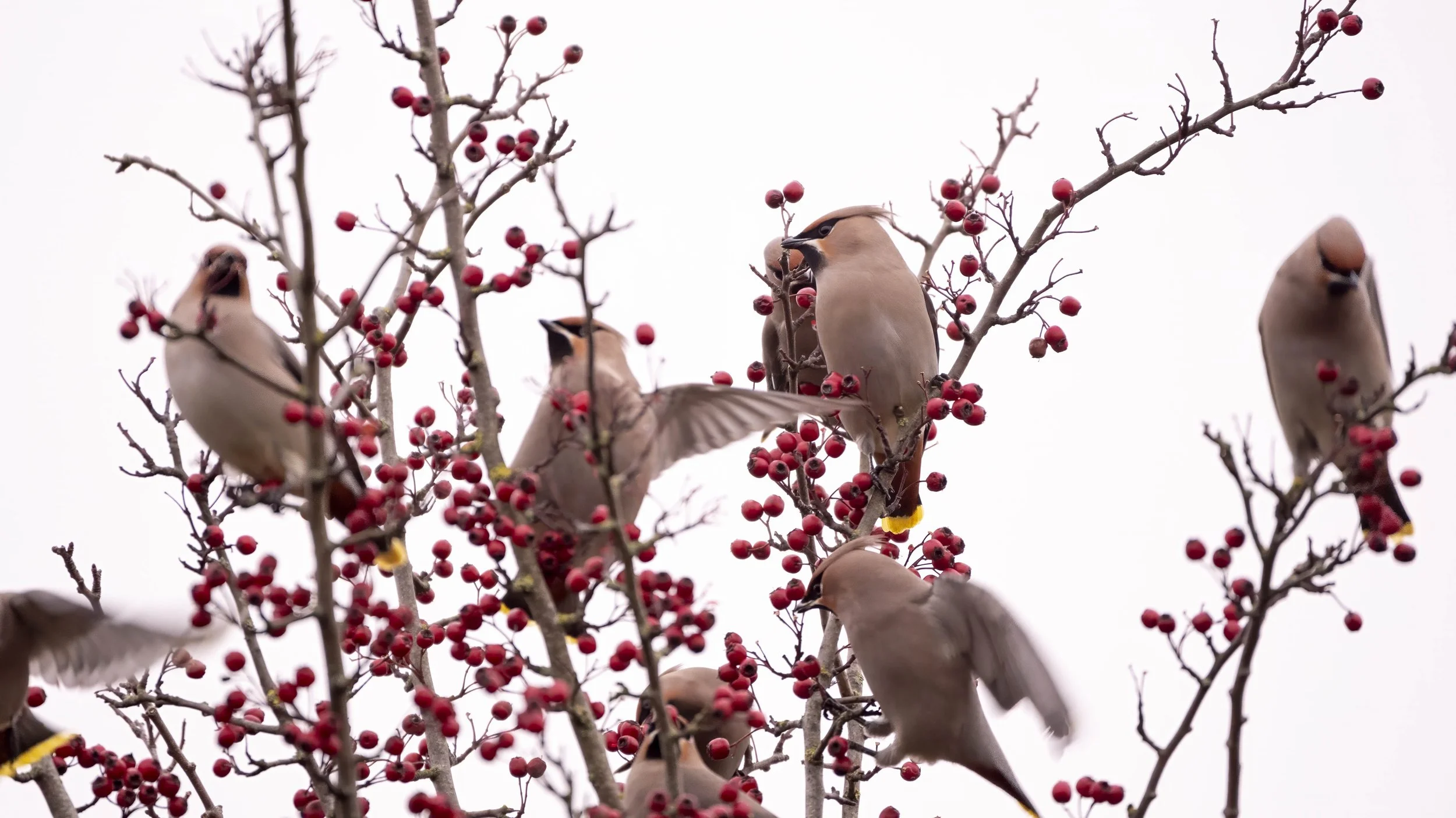
Bohemian waxwings in Scotland
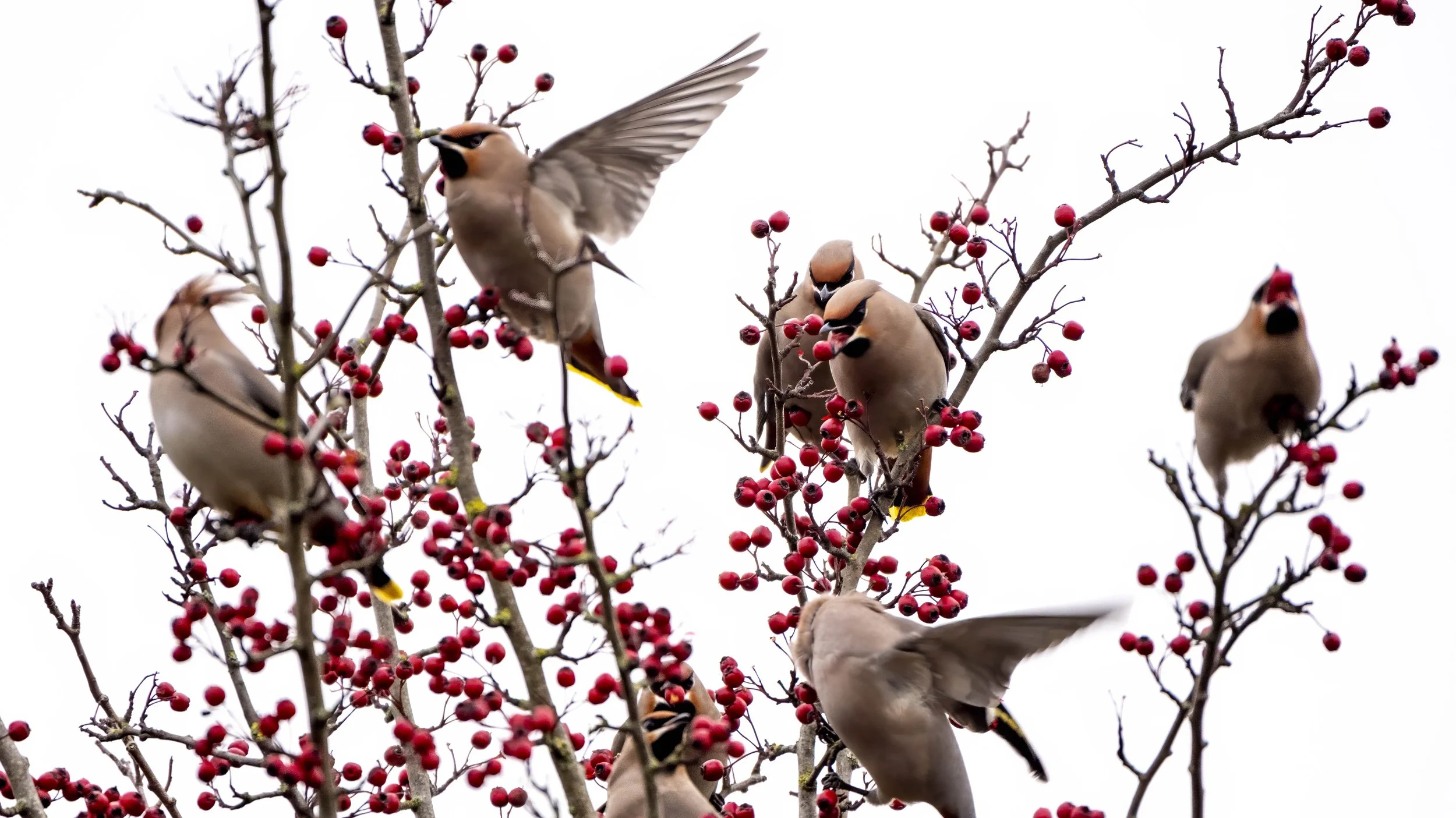
Barry Buddon, Monifieth, Tayside
27 December 2026 Looking for Waxwings
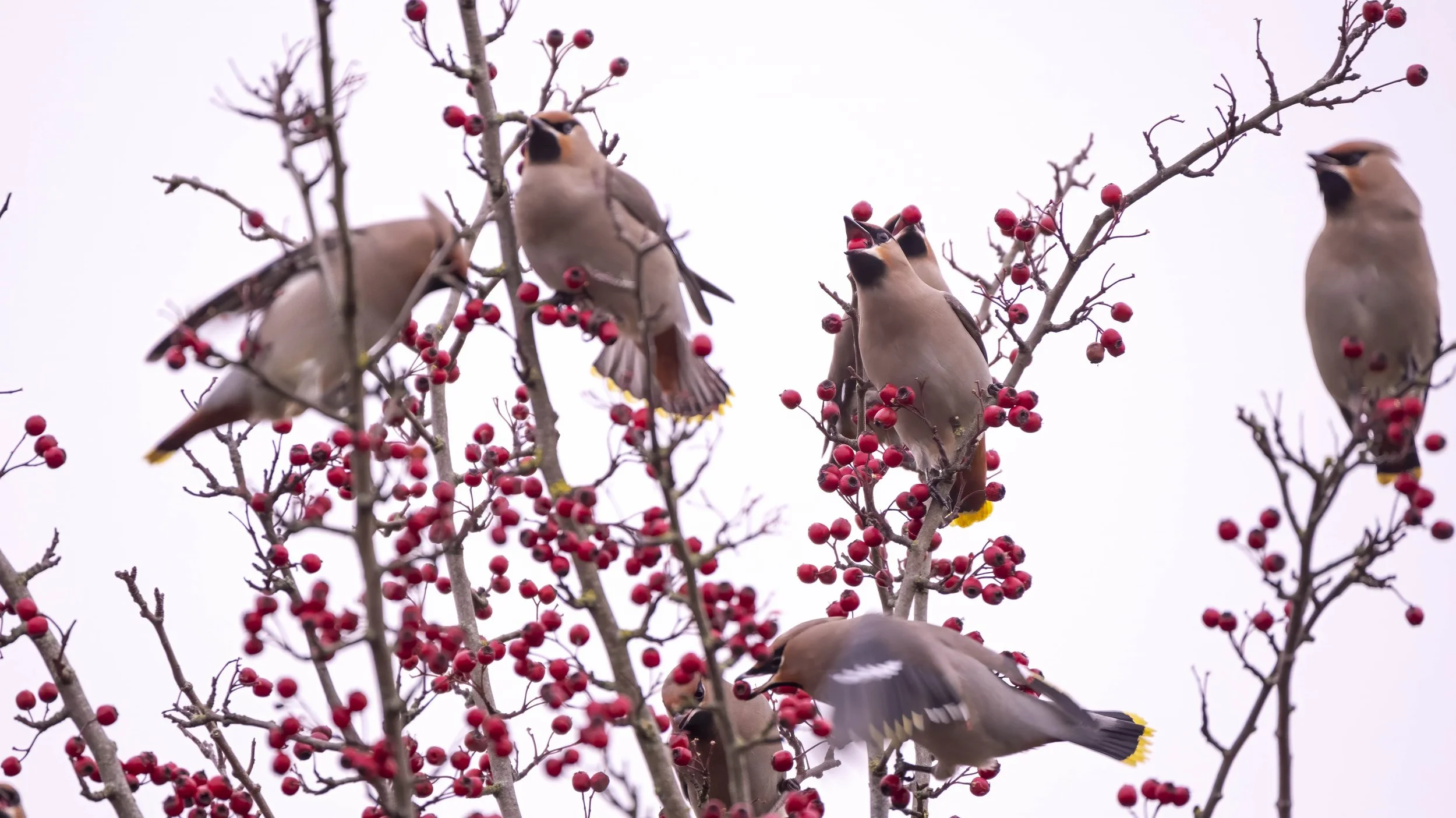
Out today to check a report of Bohemian waxwings feeding along the railway corridor at Barry Buddon, Monifieth. The line sits between the town and the coast, with a long strip of hawthorn still loaded with berries.
I’d only been on site a few minutes when I located a flock roosting on a bare stand of trees. They dropped quickly as a group to feed, landing close to where I was standing. For around ninety minutes they cycled between the treetops and the hawthorn, feeding in short bursts before lifting back to their perch. Their constant high, ringing trill made them easy to follow even when they shifted position.
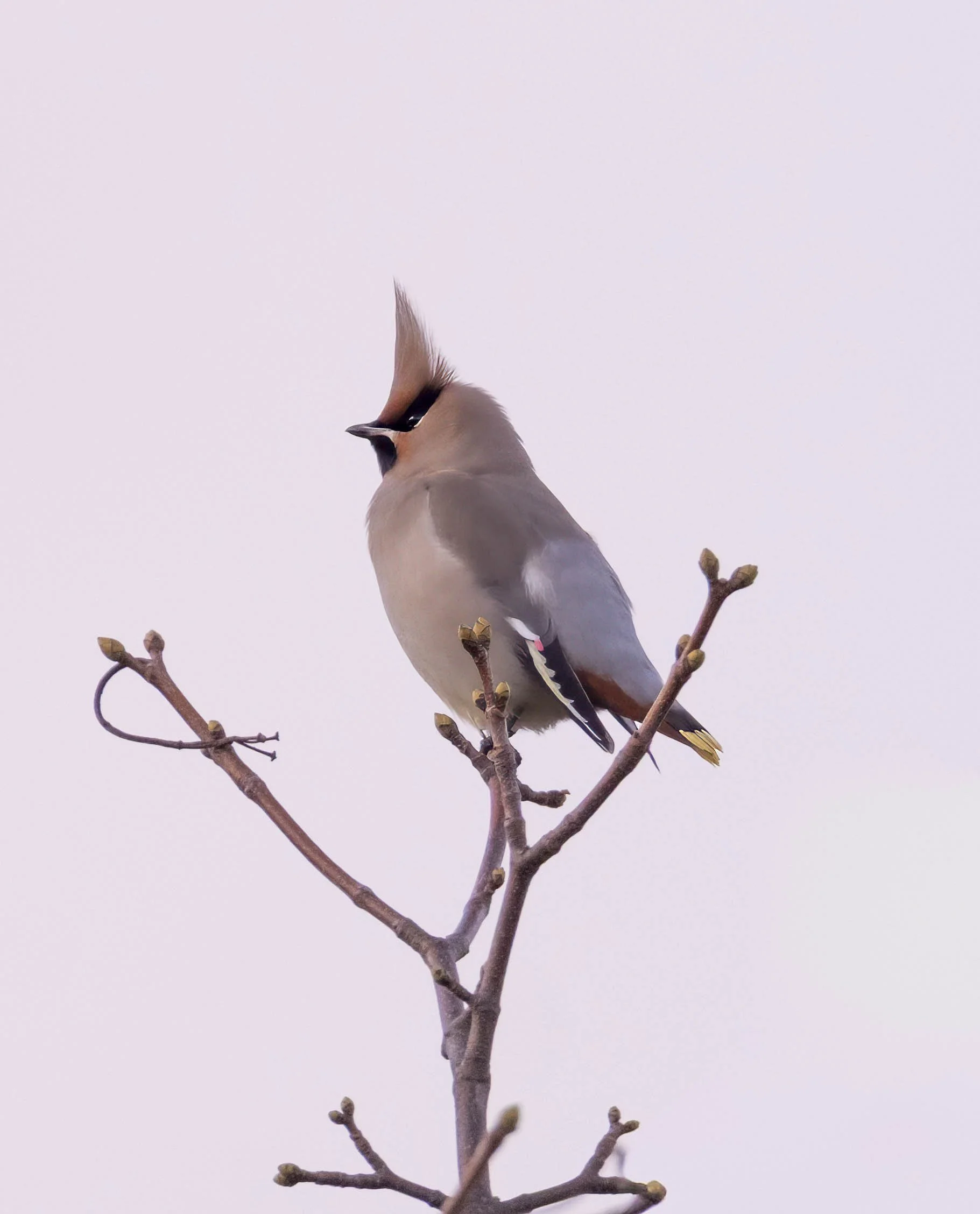
This was my first time seeing waxwings. They were larger than expected—roughly starling‑sized but noticeably bulkier. Plumage showed the typical silky grey‑pink tone, with a clear black mask, small black throat patch, and a prominent swept‑back crest visible even at distance. Wings showed the expected black, yellow, and white patterning, with red waxy tips on the secondaries and a bright yellow terminal band on the tail.
Sex Differences Observed
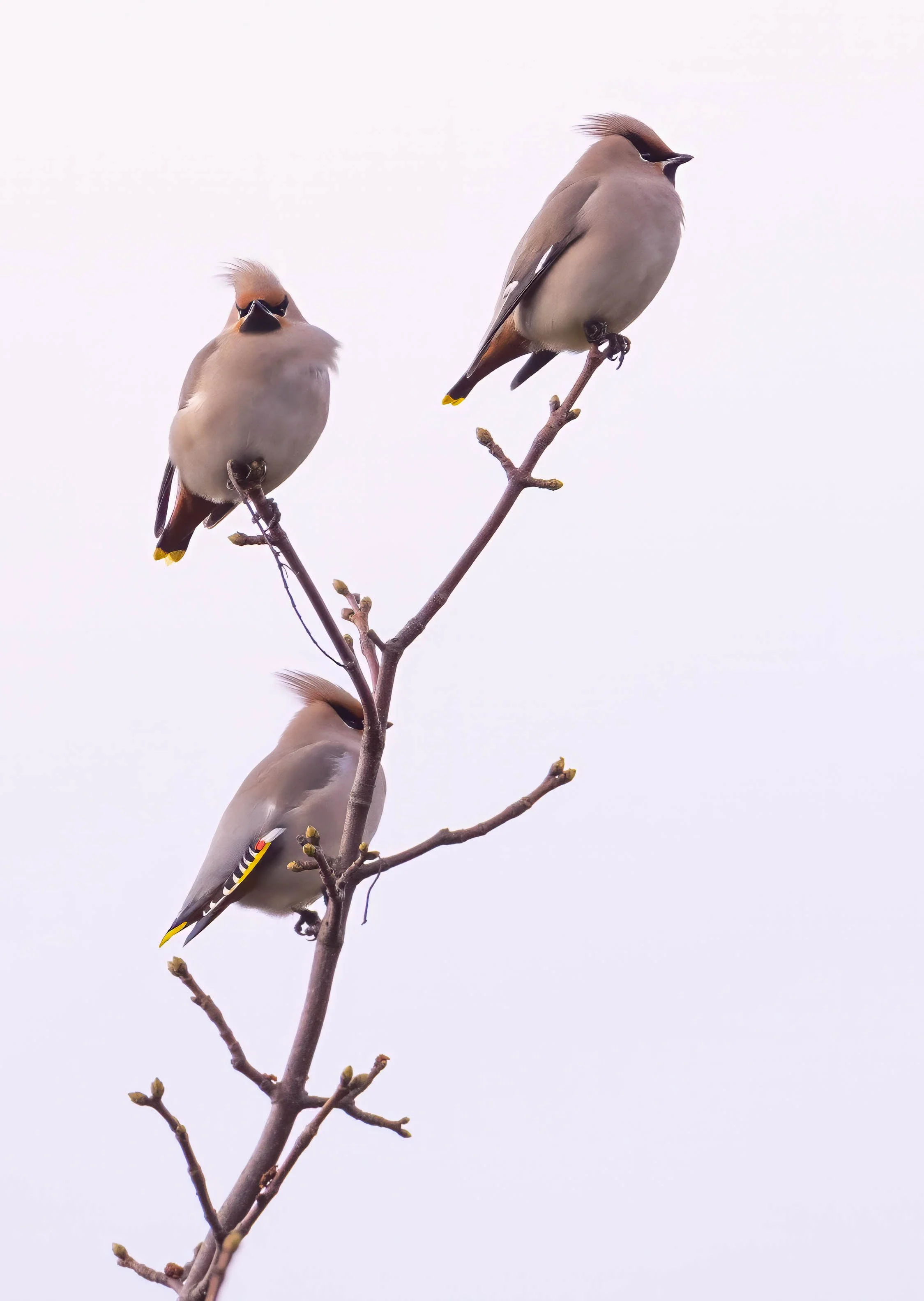
With the flock feeding at close range, it was possible to pick out differences between males and females:
Male wing bars were broader and more vivid, especially the yellow and white elements.
Female wing bars appeared narrower and slightly duller, with less contrast overall.
Males also tended to show more extensive red wax tips, though this varied between individuals.
Overall body colour was similar, but males often looked marginally richer or cleaner in tone.
These differences were subtle but noticeable when birds perched side‑by‑side or when the flock paused on the upper branches.
Species Notes & ID Pointers
Size & shape: Compact, plump, short‑necked; obvious peaked crest.
Plumage: Smooth grey‑pink overall; no streaking.
Face: Black mask with white border; small black throat patch.
Wings: Black, white, and yellow bars; red wax tips on secondaries (more extensive in males).
Tail: Square‑ended with a yellow terminal band.
Call: High, ringing trill; often continuous in feeding flocks.
Behaviour: Highly social; move in tight flocks. Nomadic winter visitors that target berry‑rich areas, especially hawthorn, rowan, and holly.
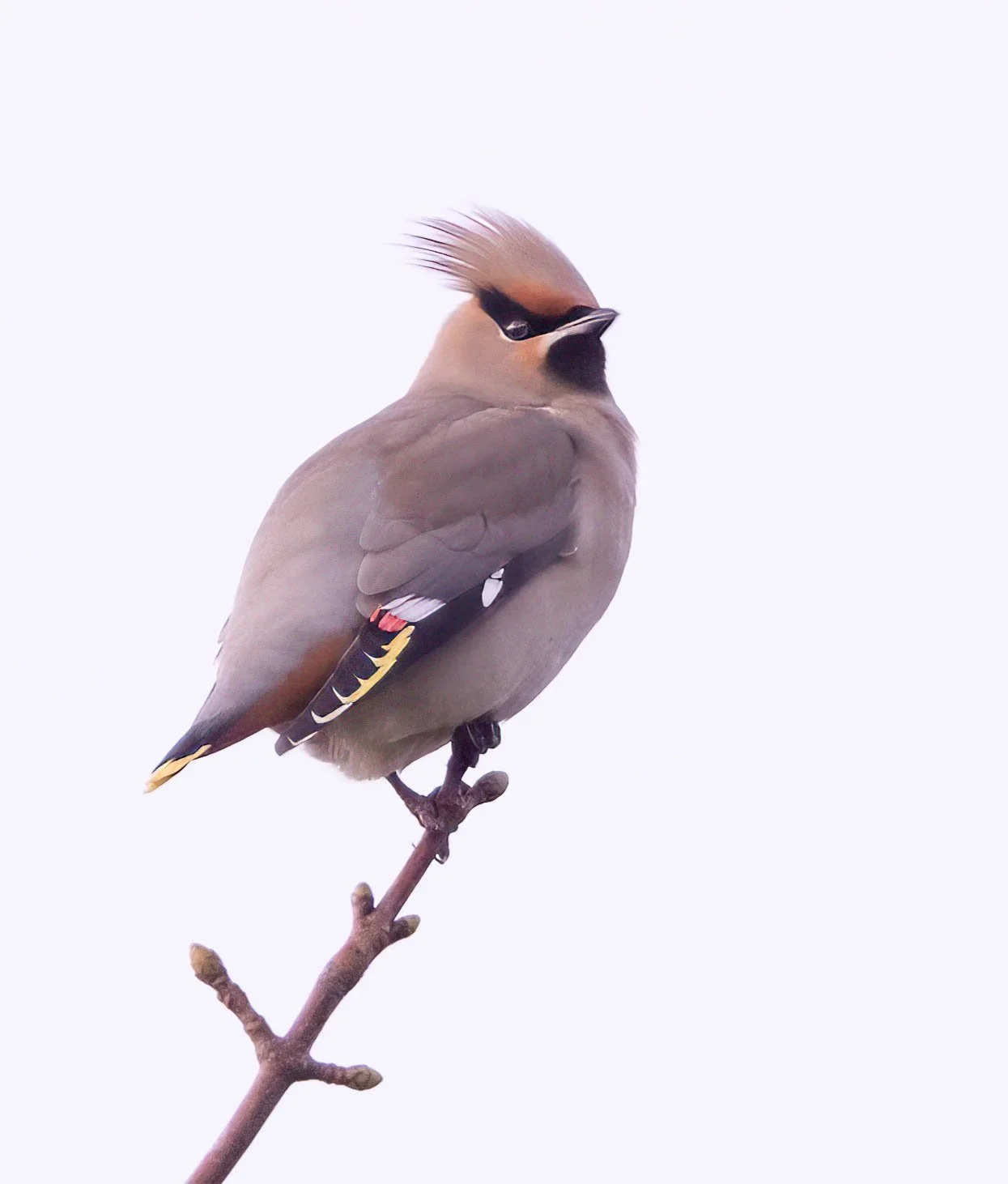
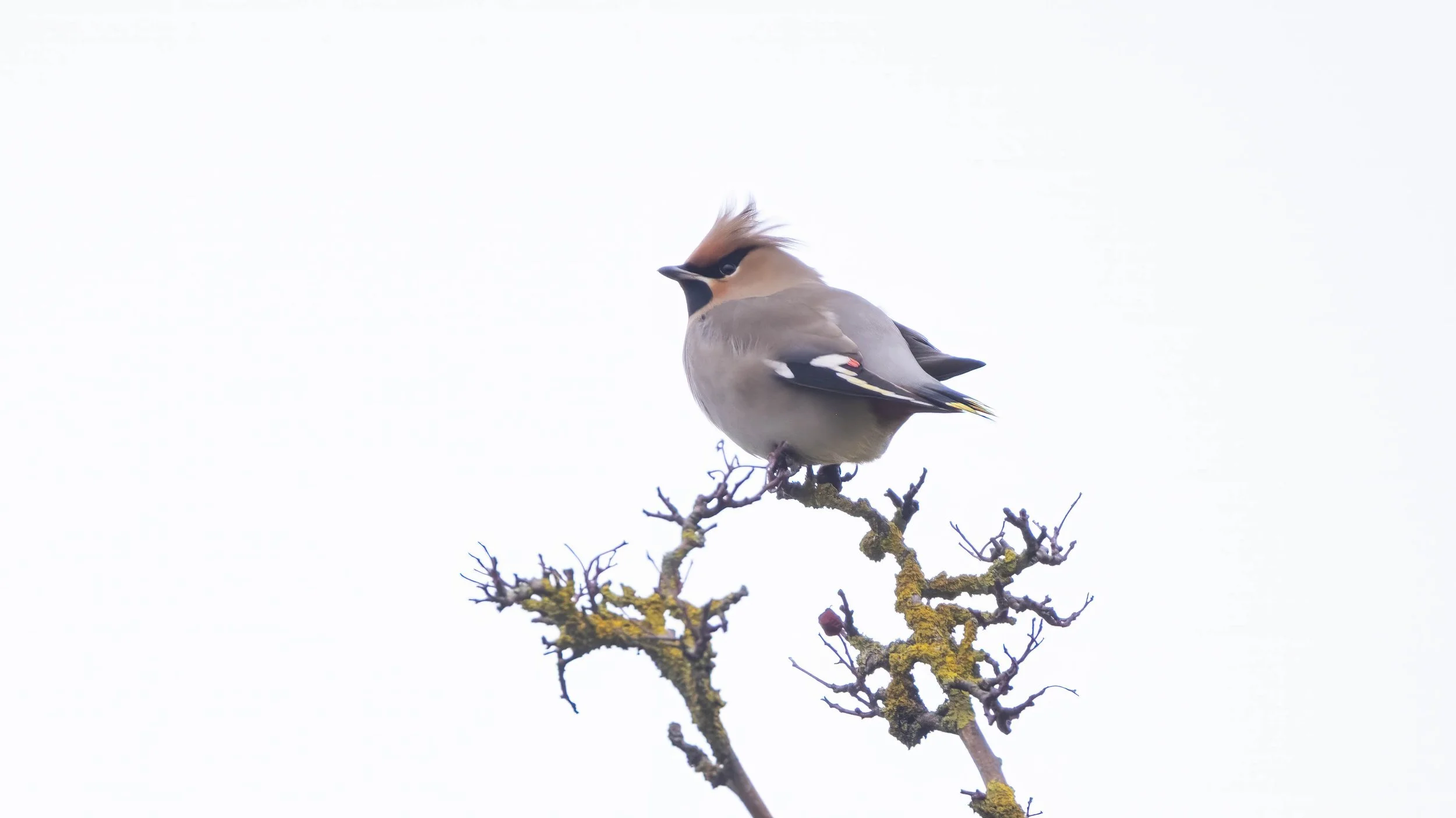
Not the best of photos today. It was bitterly cold and overcast giving very poor light, the photos handheld because I was moving about and a high ISO to allow for a reasonable shutter speed. However, a first for me, and a site I visited again on January 1st to get the waxwings on my 2026 list!